Does a wheel mark on a lamp’s data sheet mean it can legally be installed on your ship? Not necessarily. Even experienced buyers often make mistakes with wheel mark compliance for three reasons: the Directives cover only specific product categories, apply only to certain flag states, and the European Commission updates the list of covered products almost every year. Most rejected deliveries stem from the following five mistakes – each of which can be avoided.
What Is MED? Which Ships Must Comply?
MED refers to the EU Marine Equipment Directive 2014/90/EU, which applies to equipment that IMO instruments require to be approved by the flag State, provided that the equipment is installed on ships flying the flag of an EU Member State, Norway or Iceland. In 2026, EMSA confirmed on its “Marine Equipment Directive and MarED” page that the list of approved equipment is intended for the above flag States, and that conformity assessment is carried out by notified bodies.
Mistake 1: Treating the wheel mark as a general quality certification mark. Article 9(2) of Directive 2014/90/EU prohibits affixing the wheel mark to any product outside the Directive’s scope. Therefore, if the wheel mark appears on a product not covered by the Directive, it indicates a problem with the supplier rather than higher product quality.
The scope of application depends on the ship, not the factory. Under Article 3(1), the rules apply regardless of whether the ship is in the EU when the equipment is installed. For example, a Maltese-flagged bulk carrier refitted in Zhoushan had navigation lights installed that were subject to the same requirements as if they had been installed in Rotterdam.
The Directive is lex specialis. Article 3(2) provides that it is the only applicable EU regulatory regime for equipment within its scope. A CE mark obtained under the Low Voltage Directive cannot replace the wheel mark. This guide to the 7 critical standards for marine light certification therefore discusses the two marks separately.
Directive 2014/90/EU, Article 9(2): The wheel mark shall not be affixed to any product other than those referred to in paragraph 1.
Which Marine Lighting Products Need MED Certification ?
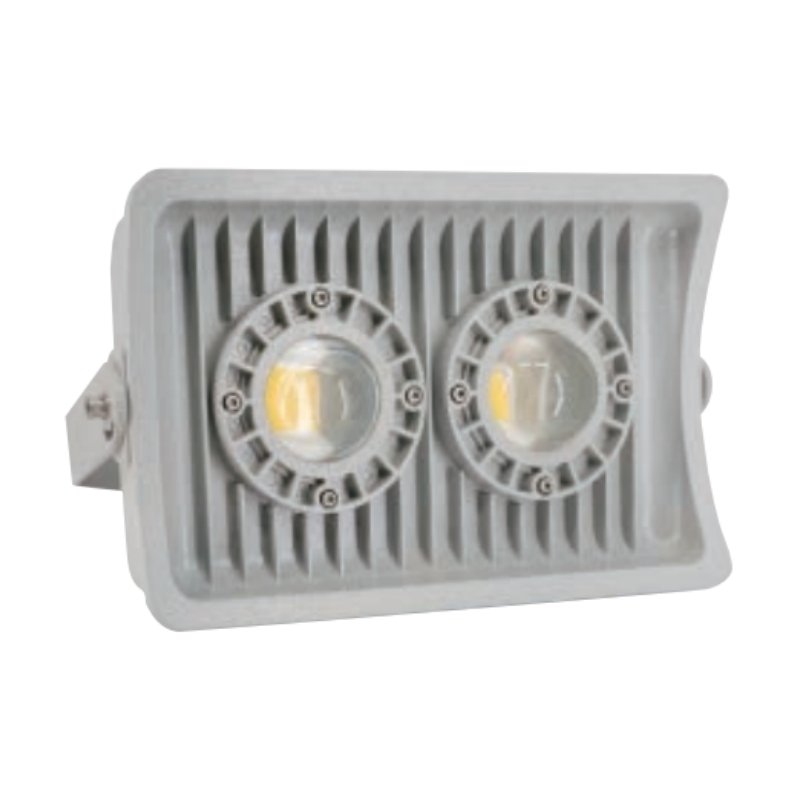
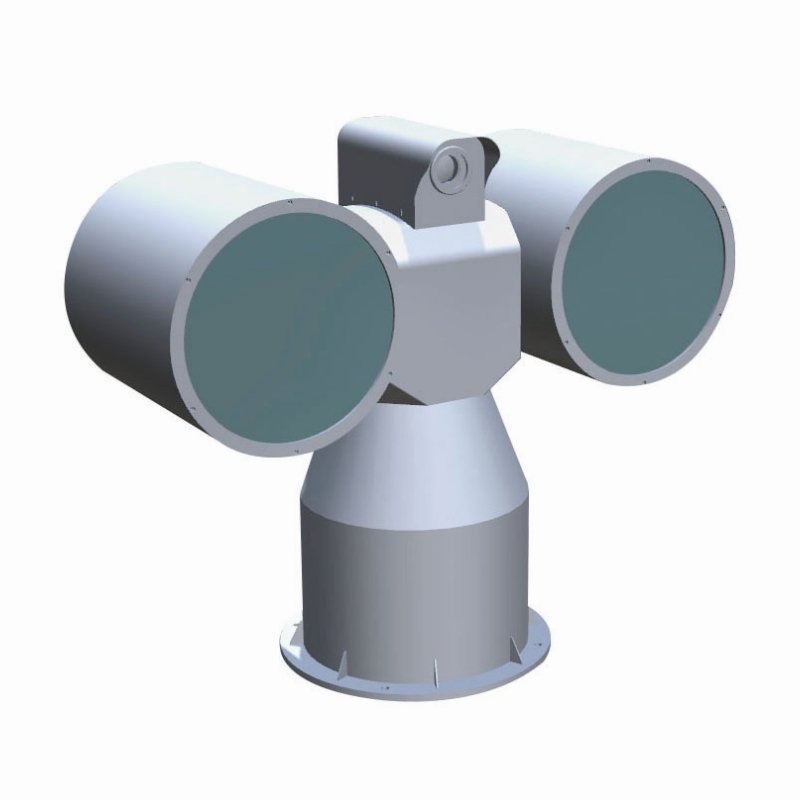
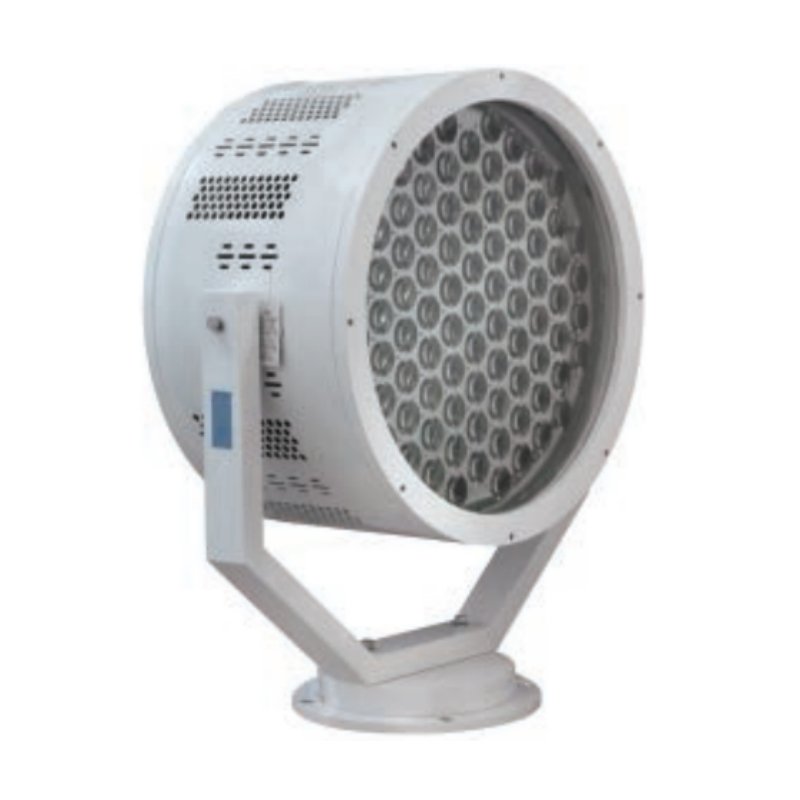
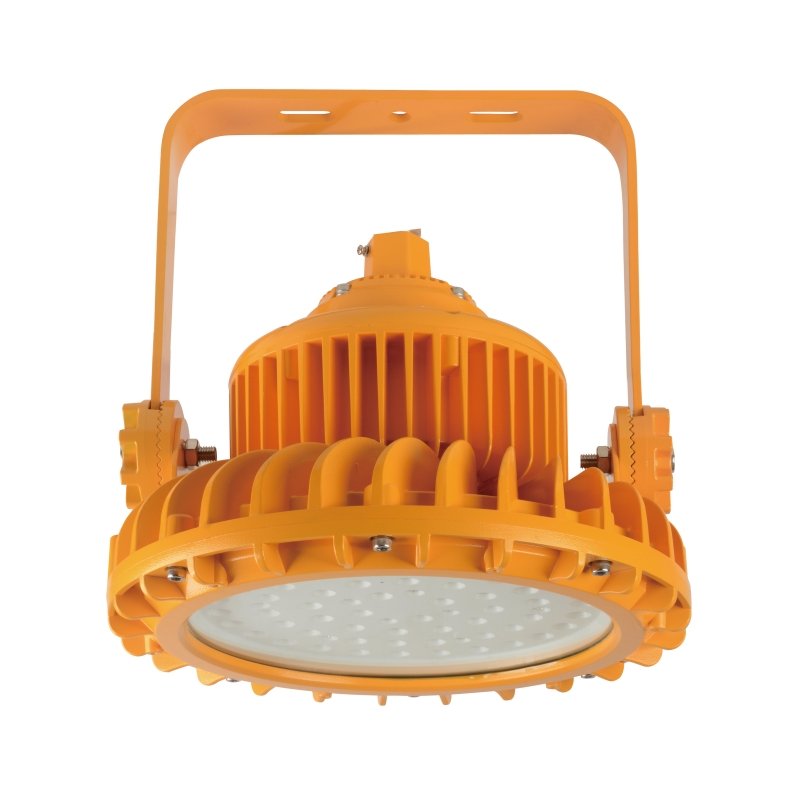
Only a limited list of lighting products falls within the scope of the Directive. In July 2026, Implementing Regulation (EU) 2026/1434, published on EUR-Lex, listed the following categories: navigation lights, daylight signalling lights, lifeboat searchlights, position-indicating lights, and low-location lighting components. Ordinary floodlights, cabin lamps, and connectors are not covered.
| Item number | Equipment | Key testing standards |
|---|---|---|
| MED/6.1 | Navigation lights (masthead, side, stern, all-round) | EN 14744, IEC 60945 |
| MED/4.52 | Daylight signalling lamp | IMO MSC.95(72), IEC 60945 |
| MED/1.38 | Searchlights for lifeboats and rescue boats | IMO MSC.81(70), IEC 60945 |
| MED/1.2a to c | Position-indicating lights (survival craft, lifebuoys, lifejackets) | ISO 24408, IEC 60945 |
| MED/3.40 | Low-location lighting components | ISO 15370:2021 |
| Not listed | Floodlights, cabin lights, watertight plugs and sockets | Class type approval |
Mistake 2: Requiring a supplier to affix the wheel mark to a product that has no item number.
Purchasing departments often write “MED approved” against every lighting item in an RFQ. However, no notified body can issue such a certificate for floodlights or watertight sockets. The correct approach is to require classification society type approval.
Connectors are subject to a different set of rules. This IEC vs USCG marine plug standards comparison explains which rules apply. The daylight signalling lamp has its own item number. The daylight signalling lamp and Morse signalling guide covers the photometric requirements of MSC.95(72).
How MED Wheel Mark Certification Works: Modules B, D, E, F and G
MED wheel mark certification involves two parts. Under Annex II to Directive 2014/90/EU, EC type-examination (Module B) must be combined with a production-stage module: Module D, E or F for series-produced products, and Module G for individual products. In June 2025, DNV’s revised Module D certificate format clearly stated that a Module D certificate can be used only with a valid Module B certificate to authorize affixing the wheel mark.
Mistake 3: Accepting a product with only a module B certificate. Module B proves only that the design passed type-examination, not that manufactured luminaires conform to the approved design. The manufacturer is not entitled to affix the wheel mark without valid Module D, E or F approval.
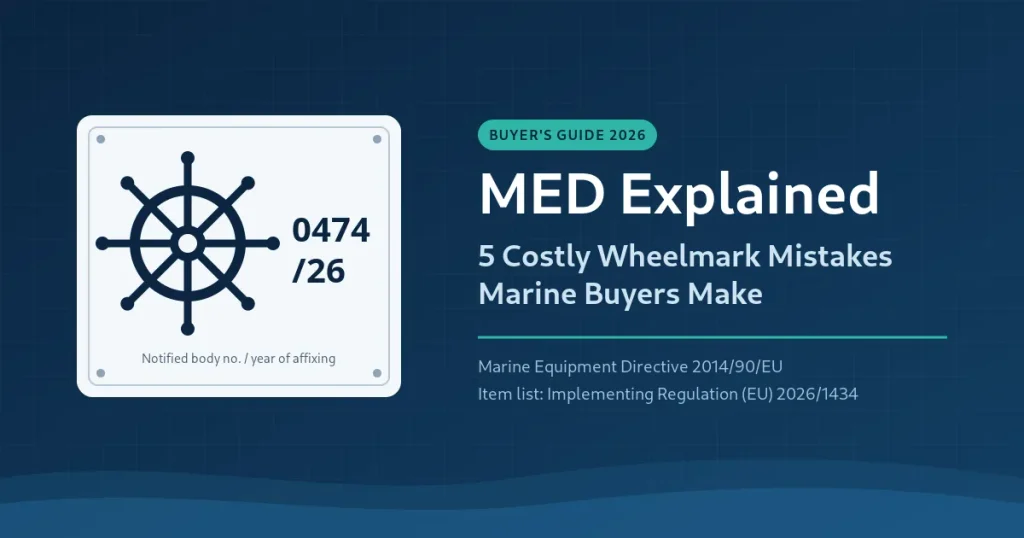
The wheel mark itself contains verifiable information. Article 10(3) requires the four-digit notified body number and the year of affixing to be marked after the wheel mark. Annex I stipulates that the wheel mark must be at least 5 mm high. For example, “0474/26” on a label indicates that the notified body responsible for production surveillance is 0474 and that the product was marked in 2026.
Document retention periods are also long. Under Article 12(4), manufacturers must keep technical documentation and the EU Declaration of Conformity for at least 10 years after affixing the mark. Article 16(4) requires a copy of the Declaration to be kept on board until the equipment is removed from the ship.
When comparing models in a marine navigation light product series, you should request certificates for each model separately rather than relying on a single company-wide document. The Module D certificate lists the covered items individually, making it easy to identify missing models.
How to Verify MED Certificate Under the New 2026 Regulations
Check the certificate against the current list of covered items and the EU database. In 2026, EMSA reported that its MED Portal (Marine Equipment Database Portal) contained more than 200,000 equipment records and more than 7,000 users. Buyers can verify certificates free of charge before payment.
Mistake 4: Checking against an expired list. In 2026, DNV reported that the 10th edition of Implementing Regulation (EU) 2026/1434 entered into force on August 31, 2026, replacing the 9th edition, (EU) 2025/1533. Declarations of Conformity for products manufactured from that date must be issued under the new regulation.
A five-step verification process can cover most cases:
- Match the item number (e.g., 6.1 for navigation lights) to the product type.
- Confirm that the Module B certificate and the Module D, E or F certificate are valid.
- Check whether the notified body number on the label matches the issuing notified body.
- Search the EMSA portal by certificate number.
- Request a copy of the EU Declaration of Conformity issued under (EU) 2026/1434.
Newbuild projects should pay particular attention to the timing rule. Annex (c) to the 2026 Regulation stipulates that, provided the equipment is installed within 30 months, “placing on board” may be calculated from the date of delivery to the shipyard. For items newly added to the 2025 list, inventory products covered by national type approvals issued by Member States may continue to be shipped until 23 September 2028.
A hazardous-area luminaire requires additional certification beyond the wheel mark. The ATEX vs IECEx rules for marine lighting explain why vessels follow the IECEx route plus classification society approval.
MED, Red Ensign and USCG: Which Mark Does Your Flag State Require?
The wheel mark applies to ships flying the flags of EU Member States, Norway, and Iceland. In 2026, DNV confirmed that equipment intended for UK-flagged ships and manufactured after December 31, 2022 must bear the Red Ensign mark under the Merchant Shipping (Marine Equipment) Regulations 2025, which came into force on January 5, 2026. U.S.-flagged ships must obtain a USCG approval number.
Mistake 5: Assuming that one mark is accepted by all flag States.
| Flag | Required mark | Legal basis | Where to verify |
|---|---|---|---|
| EU, Norway, Iceland | Wheelmark | Directive 2014/90/EU | EMSA MED Portal |
| United Kingdom | Red Ensign | SI 2025/1280, MSN 1874 | MCA approval database |
| United States | USCG approval number | 46 CFR 159, EU-US MRA | USCG CGMIX |
| Other flags | Flag or class acceptance | SOLAS via recognised organisation | Class approval lists |
FAQ
MED stands for the Marine Equipment Directive, EU Directive 2014/90/EU. It harmonizes the approval procedures for equipment required to be approved by flag States under SOLAS, MARPOL and COLREG. It replaced Directive 96/98/EC with effect from September 18, 2016. The current list of items is set out in the 10th edition of the Implementing Regulation, (EU) 2026/1434.
The CE mark applies to general products on the EU market, whereas the wheel mark applies only to listed marine equipment on EU-flagged ships. Article 3(2) of Directive 2014/90/EU provides that equipment within its scope is governed exclusively by that Directive. Therefore, even if navigation lights bear the CE mark, the wheel mark must still be affixed. Annex I stipulates that the wheel mark must be at least 5 mm high.
Yes, if they are installed on EU-flagged vessels within the scope of the Convention. Navigation lights fall under item MED/6.1 and are tested in accordance with EN 14744 and IEC 60945. A Module B certificate alone is not sufficient; the manufacturer must also hold Module D, E or F production approval in order to affix the wheel mark to each luminaire.
According to guidance from IRClass (Indian Register of Shipping), Module B and Module D certificates issued by notified bodies are generally valid for no more than five years. If new implementing regulations change the testing standards, certificates may be invalidated before their expiry date. Certificates issued under (EU) 2025/1533 should therefore be re-checked against the 2026 Annex.
Search for the certificate number on EMSA’s MED Portal, which contains more than 200,000 equipment records. Then check whether the notified body number printed on the product label matches the issuing notified body shown on the two certificates. A mismatch between the label and the Module D certificate is the most obvious red flag.
Conclusion
MED is a legal market-access requirement for listed equipment aboard EU-flagged ships, not a general quality certification. Specifically, buyers should do four things:
- Confirm that the product has the corresponding item number;
- Require Module B plus a production module (D, E, F or G);
- Verify the certificate on the EMSA portal against Implementing Regulation (EU) 2026/1434;
- Match the required mark to each flag State.
Following these four steps can help avoid all five mistakes above.
Bozhou Marine’s CXH series navigation lights hold MED certification issued by RINA (Notified Body No. 0474) under Modules B and D.