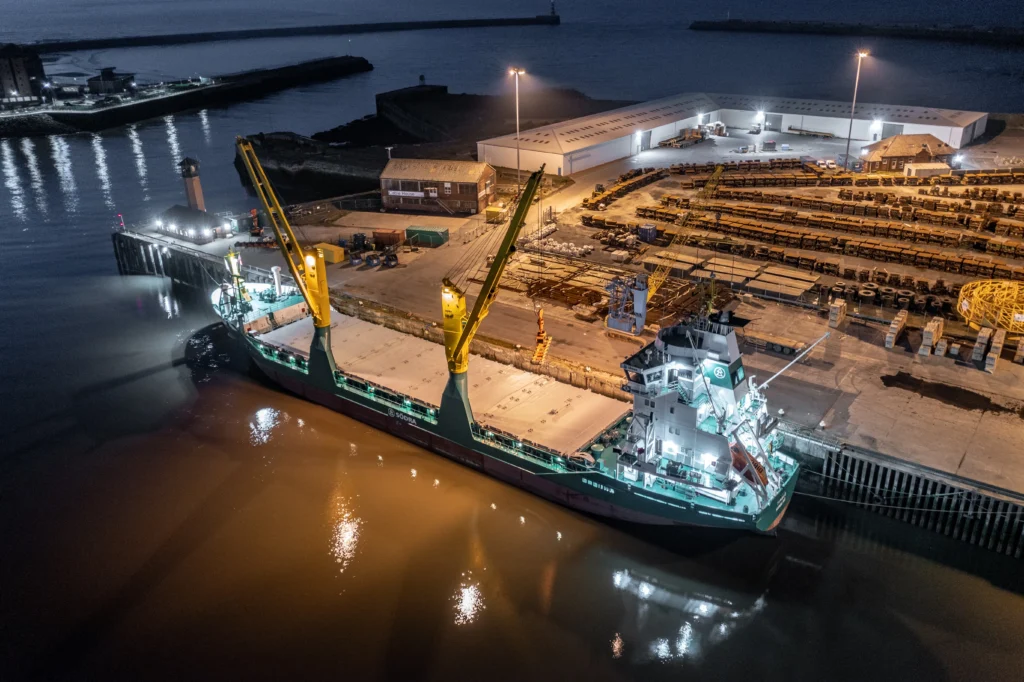
A marine searchlight is one of the most important safety equipment on the ship. When navigating in offshore fog, performing search and rescue (SAR) missions or berthing at night, the precise control of marine searchlight’s beam intensity often directly determines whether it can pass safely or effectively avoid accidents. However, many crew members regard light output intensity as a one-time fixture, thus missing opportunities for further improvements in visibility, energy consumption and personnel safety.
This guide will introduce the core content of marine searchlight light intensity adjustment: the reasons for adjustment, 3 main adjustment methods, operating specifications in different scenarios, and the application of adjustable light output in actual offshore operations.
Why Adjusting the Light Intensity of Marine Searchlights is Important?
The light output intensity control of marine searchlights has important practical value in the changeable marine environment. Visibility may change from good to dense fog in a few minutes, and the operation requirements will also switch from a wide range of search to close-range fine inspection. The fixed output marine searchlight requires the crew to passively adapt to the equipment, and the adjustable light output can accurately match the beam according to the task requirements.
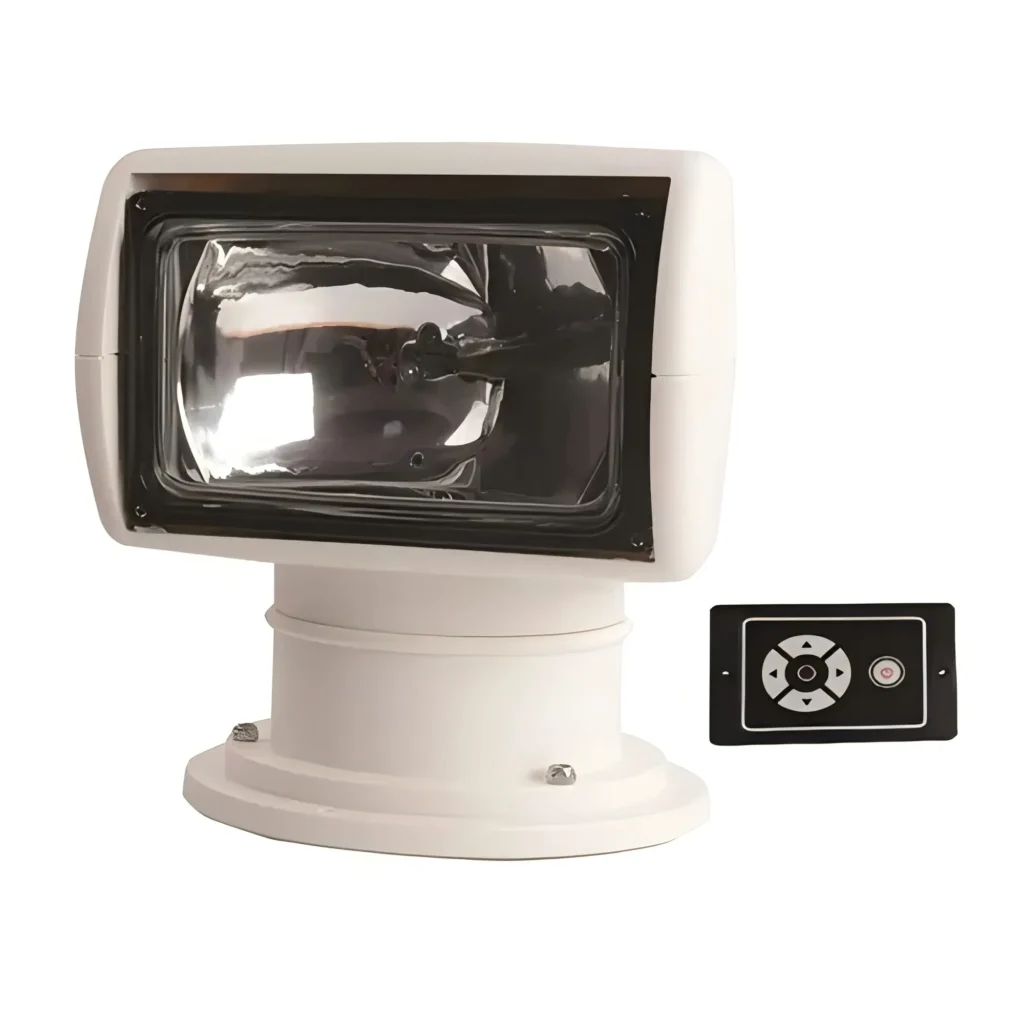
Key reasons for controlling the beam intensity of marine searchlight:
- Visibility optimization: high-intensity beams can penetrate dense fog and rainfall, and lower intensity can reduce the reflected glare on the water surface and improve the near-field resolution.
- Safety compliance: According to the requirements of the International Regulations for Preventing Collisions at Sea (COLREGs) and the International Convention for the Safety of Life at Sea (SOLAS), the light shall not damage the dark vision of the other ship ‘s crew. Adjustable ship lighting control helps operators continue to comply with regulations.
- Energy conservation: The power consumption of modern LED marine searchlights is usually between 50 W and 300 W. Under the condition of medium visibility, by adjusting the brightness to 60 % ~ 70 % of the maximum value, the power consumption can be reduced by 30 % ~ 50 %, and the endurance time of the generator or battery can be prolonged.
- Prolong equipment life: Continuous full power operation will accelerate the thermal aging of LEDs and drive circuits. Reducing the light output intensity can reduce the LED junction temperature and significantly prolong the service life.
- Crew comfort: too strong glare can easily cause eye fatigue and reduce the ability of risk identification. Reasonable implementation of marine searchlight dimming helps to maintain operational efficiency during long-term duty.
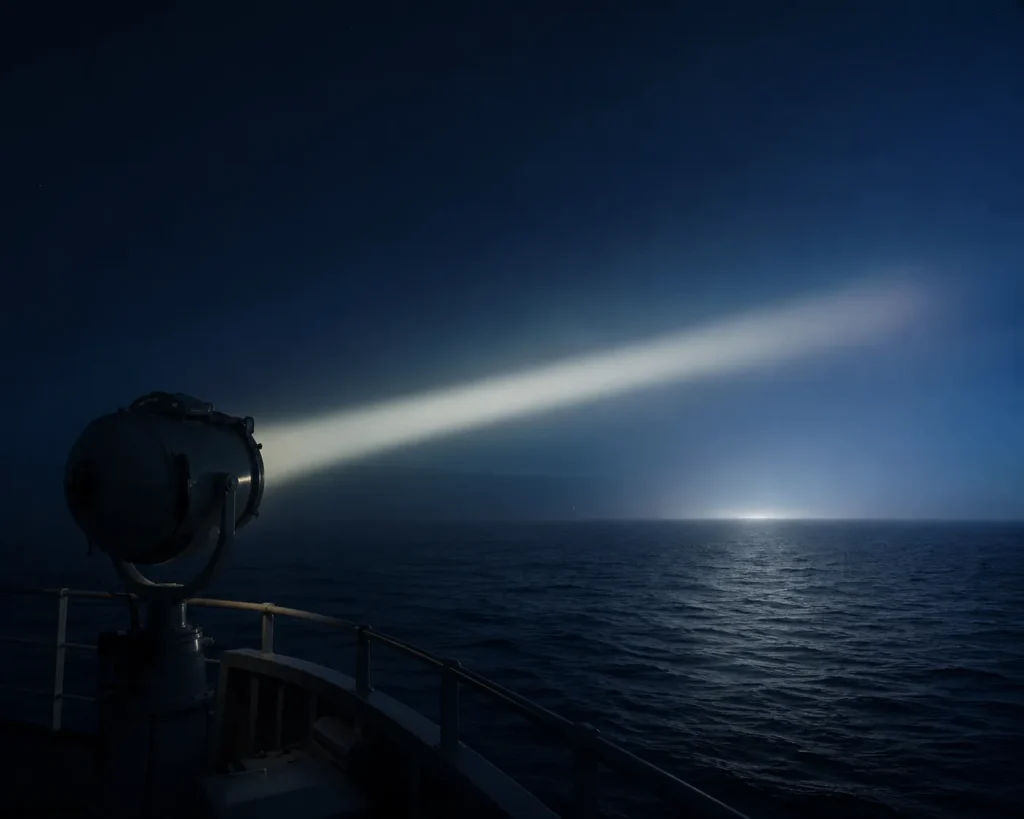
Methods of Adjusting Light Intensity in Marine Searchlights
There are three main methods to adjust the light output of marine searchlights, each of which has its own emphasis and is often used in combination in actual professional installation.
Manual Dimming: Instant Direct Control
Manual dimming is the oldest and most direct way of marine searchlight dimming. The operator directly adjusts the current flowing to the bulb or LED array through a knob, slider or rotary rheostat on the marine searchlight body or control panel.
In the old-fashioned marine searchlights using halogen or xenon lamps, the variable resistor reduces the filament temperature by reducing the current, thereby weakening the light output; in modern LED marine searchlights, the manual potentiometer controls the output intensity by adjusting the PWM (pulse width modulation) duty cycle of the LED driver.
This method is suitable for real-time tactile control in dynamic scenes, such as rapid reduction of light intensity when encountering another ship at close range, or rapid increase of power when the target is found at the edge of the beam. Its limitation is that it belongs to passive response, which requires continuous attention of operators, and the adjustment accuracy is limited when there is no scale identification.
Electronic Control: Precise Adjustment
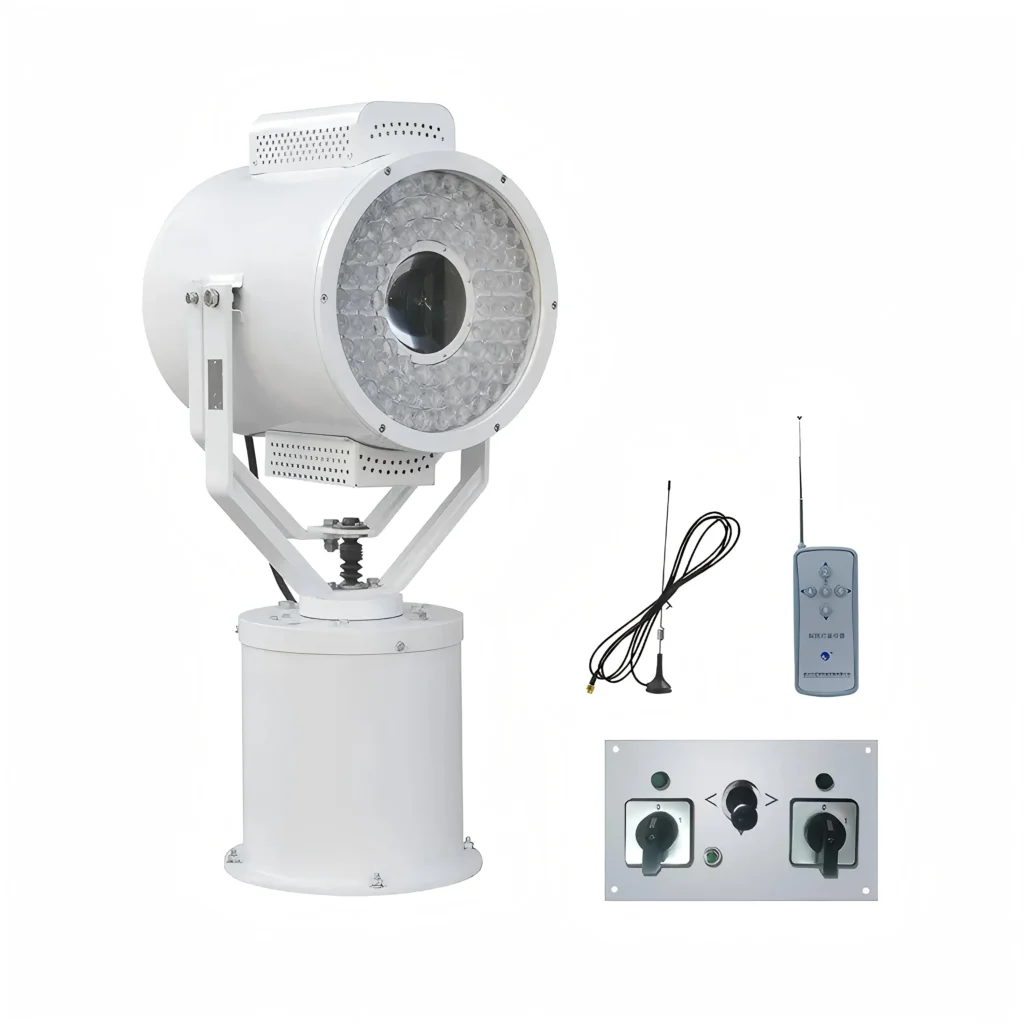
The electronic light output intensity adjustment is realized by a special control system, which is usually integrated into the bridge management system of the ship, or exists in the form of an independent remote control panel to accurately control the light output of the marine searchlight.
Modern systems use PWM dimming or 0 ~ 10V analog control signals to adjust the output of LED marine searchlights, with an accuracy of up to 1 %. Many devices support the memory preset function: the driver can set the fog patrol to 40%, the berthing assistance to 70%, and the open water scanning to 100%, and call them instantly through a single key.
The control panel sends digital or analog instructions to the built-in drive module of the marine searchlight, and the drive module adjusts the PWM duty cycle without mechanical action. Some advanced models support NMEA 2000 or RS-485 integration, which can be linked with the chart data to achieve automatic strength adjustment.
For example, the light intensity is automatically reduced when the AIS shows that his ship is within 500 meters. This method is suitable for long duty, patrol ships, offshore supply ships, and any scene that requires repeatable, recordable light output settings. Compared with manual dimming, its advantages are higher accuracy, repeatable results, support for remote operations, and deep integration with the bridge automation system.
Automatic Adjustment: Adaptive Lighting
Automatic Adjustment relies on ship-borne sensors such as ambient light sensors, fog concentration detectors, or meteorological data interfaces to continuously and adaptively adjust the beam intensity of marine searchlights without human intervention. The photoelectric sensor measures the brightness of the environment in real time, and the processor calculates the optimal output level that can maintain the illumination of the illuminated target, and controls the LED driver accordingly.
Some military and coast guard marine searchlights also integrate radar linkage automation: when the radar detects the target within a preset distance, the marine searchlight automatically aligns and rises to full power, and automatically reduces the light intensity after the target leaves. This method is suitable for full patrol vessels, unmanned surface vessels and occasions where the operator ‘s workload needs to be minimized. Its limitation is that the initial setting and calibration are more complicated; in addition, sensor pollution caused by salt fog, condensed water, etc., may lead to abnormal regulation if the system does not have self-cleaning or redundant functions.
| Feature | Manual Dimming | Electronic Control | Automatic Adjustment |
|---|---|---|---|
| Response speed | Immediate | Fast (<1sec) | Continuous/real-time |
| Precision | Low-Medium | High (1% increments) | High (sensor-driven) |
| Operator workload | High | Medium | Low |
| Installation cost | Low | Medium | High |
| Best application | Small craft,backup | Patrol/work vessels | ASVs, coast guard |
| Energy efficiency | Moderate | High (1% increments) | Highest |
Many professional ships use a combination of 3 methods in actual installations: maintaining baseline operation with automatic adjustment, quickly matching different task requirements through electronic presets, and retaining manual overrides to respond to emergencies or fine-tuning.
Best Practices for Adjusting Light Intensity in Marine Searchlights
Mastering the adjustment method is only the first step. Clarify when and how to apply these methods to transform the operational procedures from passive response to active planning.
Assess Environmental Conditions
Before adjusting any strength control equipment, it is necessary to observe the environment first. Dense fog and heavy rain can scatter high-intensity light beams, resulting in a shortened effective detection distance. Under such conditions, the beam intensity of the marine searchlight should be reduced by 30 % to 50 %, and a larger beam angle should be used to obtain the maximum coverage. When conducting long-distance detection in open and clear waters, the output intensity should be maximized and the beam should be narrowed to obtain the farthest beam penetration distance.
Before aligning the high-intensity beam to a certain position, it must be confirmed that there is no other ship within 1 nautical mile of the position. Too strong glare will damage the night vision ability of the bridge duty personnel.

Consider Operational Needs
Appropriate light output intensity should be selected according to specific tasks rather than personal habits:
- Navigation and obstacle avoidance: medium-high intensity (70% ~ 85%), wide beam and scanning search mode.
- Crew overboard/SAR: maximum Intensity, narrow beam and systematic search mode.
- Docking and close-quarters maneuvering: low to moderate intensity (30 % -50 %) to avoid glare for dock workers and surrounding ships.
Underwater object inspection or ROV (remotely operated underwater vehicle) guidance: low intensity (20% -30%) to minimize side scatter.
Use the Appropriate Adjustment Method
In a rapidly changing tactical situation, such as the sudden approach of other ships or the sudden rise of dense fog, manual over-control can provide the fastest response. For planned operations with a clear stage division (such as departure, transit, and arrival), electronic presets should be set one night in advance and called when conditions change. In long-distance ocean voyages where crew fatigue is a key factor, automatic adjustment can be enabled and operated by a sensor system, but the sensor needs to be checked for cleanliness on each shift to prevent contamination from leading to misjudgment.
Minimize Glare and Discomfort
Glare is both a safety risk and a compliance issue of the International Regulations for Preventing Collisions at Sea (COLREGs). The following measures can be taken to reduce glare:
- Unless it is necessary to identify the ship, avoid pointing the marine searchlight directly at the bridge of other ships.
- When checking the crew or passengers on the adjacent ship, use a diffuser lens or reduce the light output intensity.
- Reduced strength when operating in ports with reflective facilities, cement docks and glass curtain wall buildings can reflect back 300 W beams at near-original strength.
Conserve Energy and Extend Equipment Life
Due to the logarithmic nature of human light perception, the actual lumen output of LED marine searchlights operating at 70% of the light output intensity can still reach 85% ~ 90% of the full power, while the power consumption is only 50% ~ 60% of the maximum value. From the actual effect, a ship that runs the marine searchlight for 4 hours per shift can save considerable generator fuel during a month of navigation, and has little effect on the actual operation efficiency.
Thermal management is also critical: continuous full power operation will increase the junction temperature of LED and accelerate the attenuation of luminous flux. Most high-quality marine searchlights have a built-in thermal throttle mechanism, which automatically reduces the output when the temperature is too high, but the active dimming is always better than the passive adjustment relying on the protection circuit.
Regularly Maintain the Searchlight
If the marine searchlight is dirty or the performance is degraded, any adjustment system cannot give an accurate actual output result. The following regular maintenance plan should be implemented:
- Weekly: use a marine-grade anti-static wipe cloth to clean the lenses and check the seals for salt crystallization.
- Monthly: check and clean the ambient light sensor of the automatic system; verify whether the preset value drifts.
- Annually: check the LED module and driver electronics, check the rotating mechanism (if equipped) and use the lux meter to recalibrate the strength preset.
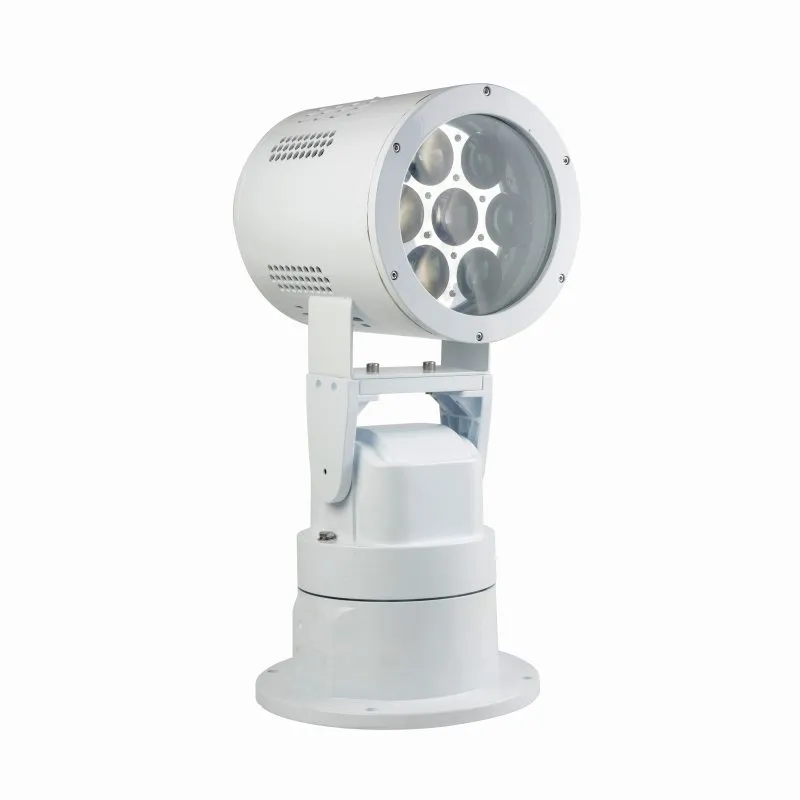
Applications of Marine Searchlight across Various Marine Operations
Marine searchlight with adjustable light output intensity plays a key role in the following practical scenarios:
- Search and rescue (SAR): SAR commanders rely on maximum beam intensity and accurate scanning angle. The automatic adjustment is combined with the red filter mode compatible with the night vision device, which can quickly switch between long-distance scanning and short-distance recognition without affecting the dark vision.
- Commercial fishing: Fishing vessels operating in mixed navigable waters use lower light intensity when approaching small vessels to avoid interference with other crew members; rise to full power at low visibility to scan the position of the fishing gear to mark the floating ball or fishing net.
- Offshore oil and gas support: Platform Supply Vessel (PSV) and Anchor-Handling Tug (AHT) require precise marine lighting control when approaching the platform at close range. Excessively strong light will produce glare on reflective safety signs, and too weak may increase operational risks. The electronic preset for platform near distance calibration has become the standard operation specification of modern PSV.
- Naval and coast guard patrol: Military marine searchlights are usually integrated with fire-control systems or surveillance systems. The light output intensity adjustment can support non-lethal deterrent actions (such as the use of dazzlers), perform surveillance tasks without exposing the action intention, and quickly rise to full power when identifying queries.
- Yacht and recreational cruising: LED marine searchlights are becoming increasingly popular even for casual navigators. Bozhou’s Marine searchlights support remote-controlled dimming, allowing light intensity adjustment to be applied to single-pilot sailors and small crew members alike.
- Port and harbor operations: Tugs and pilot boats operate in the most congested marine environment. Adjustable marine searchlights enable them to illuminate dangerous targets while avoiding glare for ferry crew, dock workers or surveillance cameras.
Bottom Line
Regulating the light output intensity of marine searchlights is a core skill for ensuring maritime safety, not an optional detail. Correctly setting the light intensity can improve visibility, reduce the glare of the ship and other ships, save power and prolong the life of the equipment.
To give full play to the performance of marine lighting control system, it is necessary to master three main adjustment methods: manual dimming with direct control, electronic control with precision and repeatability, and automatic adjustment with adaptive low load operation, and strictly follow the operation specifications.
Whether you are deploying a new LED marine searchlight for patrol ships, upgrading existing devices, or just optimizing in-use equipment, marine searchlight beam intensity management should be a deliberate practice skill, not an after-the-fact remedy.
As the marine environment continues to change, marine searchlights must also have corresponding adaptability.
FAQ
Both searchlights and spotlights are focused, providing long-distance narrow beams (suitable for searching for distant objects) ; floodlights are a wide-angle scattering type, which is suitable for illuminating large-area decks. Searchlights usually have higher power and longer range (up to several kilometers).
The main types include: LED Searchlights (energy-saving, durable), Halogen (economical), Xenon (ultra-long range, but high energy consumption). The installation method is divided into fixed, portable hand-held and remote control rotary (360 ° rotation).
With 75 % lower energy consumption, higher brightness, longer service life ( tens of thousands of hours ), anti-seismic and corrosion resistance, instant start-up and no ultraviolet radiation, LED search lamp is the first choice for modern ships.
Depending on the power and type : household/small boat LED search lights up to 500-1000 meters ; high power Xenon or professional LED up to 2-11 km (1 Lux standard). The actual distance is affected by weather and sea conditions.
Install at a high position (such as bridge or mast) to ensure that the line is waterproof and well grounded. The focus of maintenance is to regularly clean the salt scale, check the life of the sealing ring and the lamp, and avoid glare caused by long-term direct water surface.