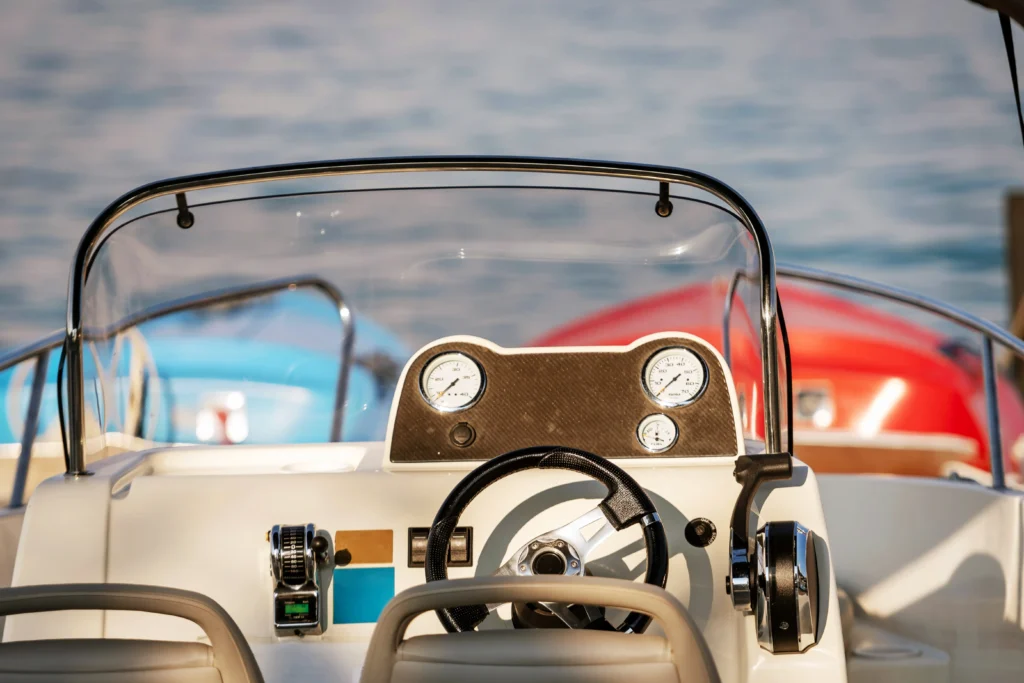
Boat steering wheels (often called the helm) come in various materials and styles,ranging from classic wood to high-performance stainless steel and lightweight carbon fiber. Most modern wheels are designed to fit a standard 3/4″ tapered shaft,ensuring compatibility across many steering systems.
Has the steering wheel on a boat cracked, slipped, faded, or felt uncomfortable during berthing? Before buying a replacement boat steering wheel, the real difficulty is not the appearance, but the adaptation. Improper diameter will block the switch ; the mismatch of hub holes will cause the steering wheel not to be installed correctly. This article will explain how to choose the right boat steering wheels from the aspects of size, material, steering structure and actual use scenarios.
How Do I Choose the Right Size Steering Wheel for My Boat?
Choosing the right steering wheel isn’t just about aesthetics; it’s about leverage, ergonomics, and spatial awareness. If the wheel is too big, you’ll be hitting your knees; if it’s too small, you might struggle to manhandle the rudder in a heavy chop.

Boat steering wheels size and steering shaft adaptation: first confirm the 3/4 inch rule
The marine steering wheel is directly connected to the helm (bridge steering mechanism), so the adaptability must take precedence over the appearance. Confirm the following four parameters before purchase:
- Steering shaft type: tapered shaft or straight shaft
- Center hole diameter: commonly 3/4 inches, about 19 mm
- Steering wheel diameter: small and medium-sized ship common range of about 12.5-15.5 inches
- Hub height and instrument table clearance: especially important when the steering wheel is close to a switch, throttle, instrument or cup holder
For most small yachts, workboats, and pontoon boats, a 3/4-inch tapered shaft is a common choice. The center cover of the old steering wheel should be removed to check the structure of the steering shaft before boat steering wheel replacement. If the old steering wheel uses a 3/4-inch tapered shaft with a keyway, it is usually possible to directly install a compatible marine steering wheel without replacing the entire steering mechanism. If the old steering wheel uses a custom adapter seat, square hole structure, or multi-bolt mounting structure, you need to confirm whether you need an adapter.
Steering Wheel Types: PU Foam, Stainless Steel, Destroyer Style and Pontoon Boat Steering Wheel
Different steering wheel types are suitable for different ship types and environments. The corrosion degree of a pontoon boat steering wheel in a fresh water environment is different from that of a yacht steering wheel in a salt water environment. The steering wheel used by the service ship also needs to be more durable than the leisure ship.
| Steering Wheel Type | Best For | Strengths | Watch For |
|---|---|---|---|
| PU foam over aluminum alloy | Pontoons, yachts, small workboats | Soft grip, light weight, lower hand fatigue | Needs inspection for wear, UV aging, and surface damage |
| Stainless steel | Saltwater boats, exposed helms | Strong corrosion resistance and long service life | Bare metal can feel hot/cold and may cost more |
| Destroyer-style wheel | Traditional boats, commercial-style helms | Classic marine look, open spoke design | Larger spoke angles may affect dash clearance |
| Sport-style wheel | Pontoon boats, leisure boats | Comfortable grip and modern appearance | Confirm shaft and hub fit before buying |
| Wood-look or decorative wheel | Classic restoration | Strong visual appeal | Avoid purely decorative wheels not built for marine steering loads |
If the use environment is salt water or long-term open air, stainless steel is the first choice because its corrosion resistance is better than ordinary carbon steel or low-grade metals. However, it should be noted that stainless steel is not completely maintenance-free. Salt, water, cracks and lack of cleanliness may still lead to pitting or surface rust.
The British Stainless Steel Association pointed out that 316 stainless steel is commonly used in marine applications, but crevice corrosion and pitting corrosion may still occur under certain seawater conditions, so design and maintenance are still important.
Boat Steering Wheel Replacement: How to Replace without Damaging the Helm Steering Mechanism
Boat steering wheel replacement is usually not complicated, but the old steering wheel may be stuck due to corrosion, aging or long-term compression of the conical shaft. The safe replacement steps are as follows:
- Turn off the ship ‘s power and ensure the safety of the bridge area.
- If conditions permit, adjust the engine, rudder or tail drive to the middle position.
- Remove the steering wheel center cover.
- Remove fixed nuts and washers.
- If you need to keep the steering wheel angle, mark the old steering wheel position first.
- Pull the old steering wheel straight out along the direction of the steering shaft. If the old steering wheel cannot be pulled out directly due to being stuck, the nut should not be loosened by forcibly killing the direction. Instead, the appropriate steering wheel puller should be used for disassembly, or the marine anti-rust lubricant should be sprayed first and wait for penetration. Do not directly hit the steering shaft end, so as not to damage the shaft end thread.
- Clean steering shaft and keyway.
- Install new steering wheel, keys, washers and nuts. During installation, it is necessary to ensure that the key is correctly stuck to the keyway, and the steering wheel should be firmly attached to avoid shaking.
- After tightening, turn the steering wheel from the left limit to the right limit in the wharf environment, check whether the steering direction is correct, and confirm that the spokes, knobs and rims will not touch the dashboard, throttle, knee, seat or console. Before starting, confirm that the surrounding gap is sufficient again.
Best Boat Steering Wheels: the Right Choice for Pontoon, Yacht and Small Workboat
Different ship types have different requirements for Best Boat Steering Wheels. It should be selected according to the actual use scenario.
For pontoon boats
The pontoon boat steering wheel should maintain a comfortable grip during low-speed turns, berthing and leisure cruises. PU foam grip is more practical because it improves hand feel and reduces the risk of slipping. For most pontoon consoles: the 12.6-13.8 inch steering wheel is usually sufficient, but it is still necessary to check the knee space, throttle position, instrument and switch layout.
For yachts
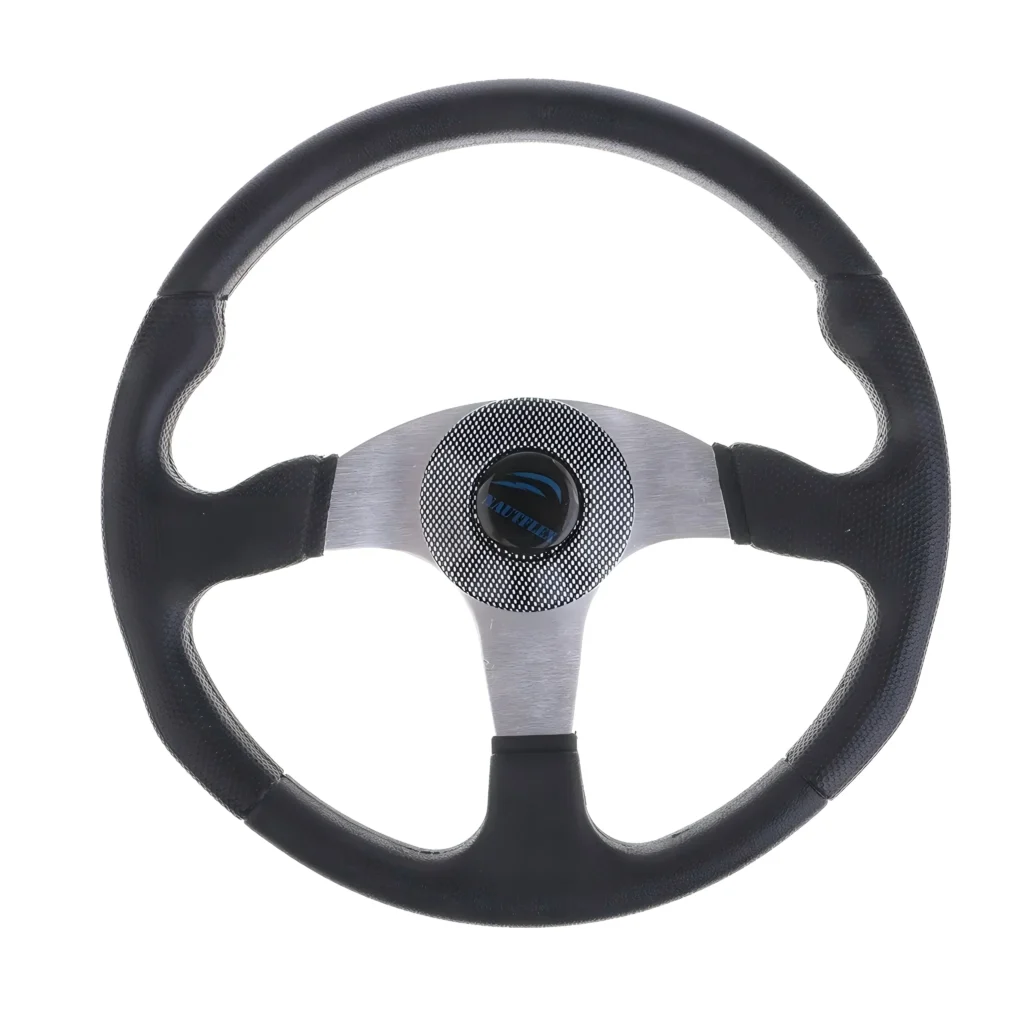
The yacht steering wheel needs to take into account the appearance, durability and grip. If the bridge deck is exposed to the outdoors for long periods of time, priority should be given to UV resistance, saltwater corrosion resistance and easy cleaning.
For small workboats
The steering wheel of a small operation ship should have the characteristics of a wet hand, easy to grasp and simple maintenance. The steering wheel that is only used for decorative purposes and not designed according to the actual steering load should be avoided. The three-spoke, PU foam-coated, and simple-shaped steering wheel is more suitable for frequent short-distance control, and can still maintain good hand comfort during repeated steering.
For boat steering wheel replacement
If the old steering wheel feels comfortable and does not block the instrument table, it is recommended to select a replacement boat steering wheel with a similar diameter (replace the marine steering wheel). If the old steering wheel feels heavy, you can choose a slightly larger diameter to increase the leverage. If the bridge space is crowded, a smaller diameter steering wheel can release space, but may require greater steering force.
Conclusion

When choosing Boat Steering Wheels, you should first confirm the suitability, and then compare the material and appearance. Check the steering shaft, outer diameter, hub clearance and steering direction before purchase. For most yachts, pontoon boats and small operating ships, 3/4″ tapered shaft with 12.6-14.2 inch PU foam-coated aluminum alloy steering wheel is a practical alternative. For use in saline environments, more corrosion-resistant materials should be selected and regularly cleaned and maintained.
Many Boat Steering Wheels are referred to as universal, but they are usually simply adapted to the common 3/4 inch tapered shaft. This does not mean that it is suitable for all ships. Before purchase, it is still necessary to confirm the center hole, taper, keyway, fixed nut, hub height and whether adapters are needed.
The best materials for boat steering wheels depend on your operating environment and aesthetic preferences, with stainless steel being the overall industry standard for its durability and corrosion resistance. For specific uses, high-performance materials like carbon fiber offer weight savings, while polyurethane and leather prioritize grip and comfort.
Absolutely, you can. In fact, switching to stainless steel is one of the most popular upgrades for boaters in the U.S., especially if you’re moving from a plastic or foam-covered wheel that’s started to degrade under the sun.
The steering wheel on a boat is usually called boat steering wheel, marine steering wheel, helm wheel or ship wheel. In modern small boats, it is connected to mechanical, hydraulic or electronic steering systems to control the direction of outboard, tail drive, rudder or water jet propulsion devices.
It is difficult to remove the steering wheel of a ship, usually because the tapered shaft is too tight, or it is corroded and jammed by salt fog, humidity and pressure for a long time. Don ‘t pry the fragile instrument table parts. Anti-rust lubricants should be sprayed first to protect the shaft end threads and, if necessary, use the steering wheel puller/detacher.