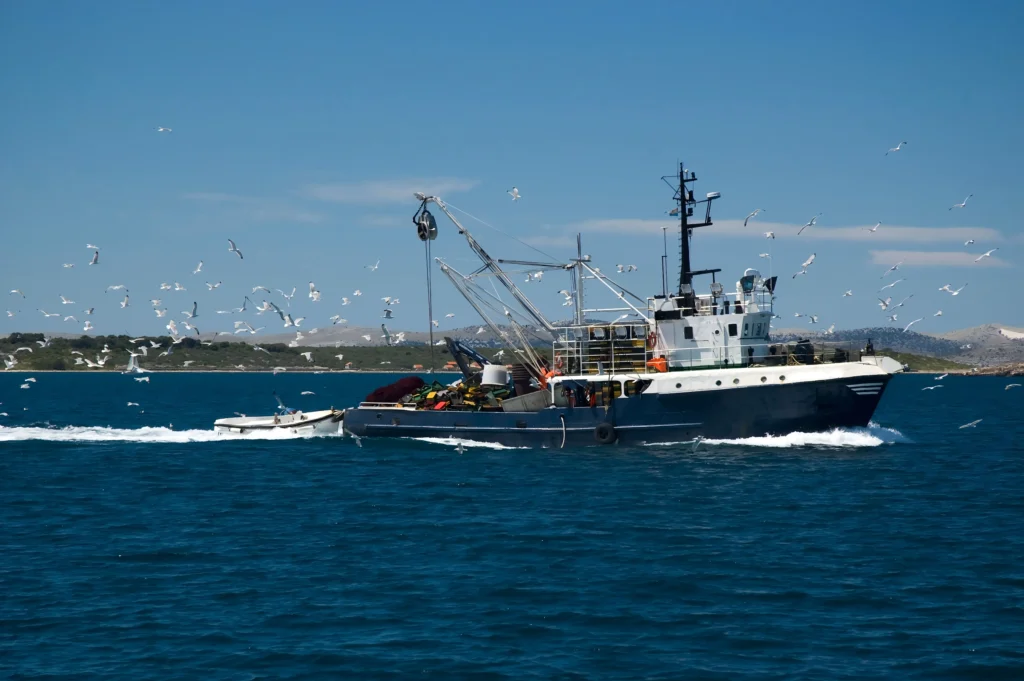
Sailing in the vast ocean at night or in bad weather, a clear view is for convenience and even for survival. It is not enough to rely solely on radar for commercial ships. You must need commercial marine searchlights in this situation.
However, there are many kinds of marine searchlights on the market, especially the choice of bulbs is often confusing. This article will lay the foundation for you to help you get rid of the confusion and make a wise choice for your ship.
What Are Commercial Marine Searchlights?
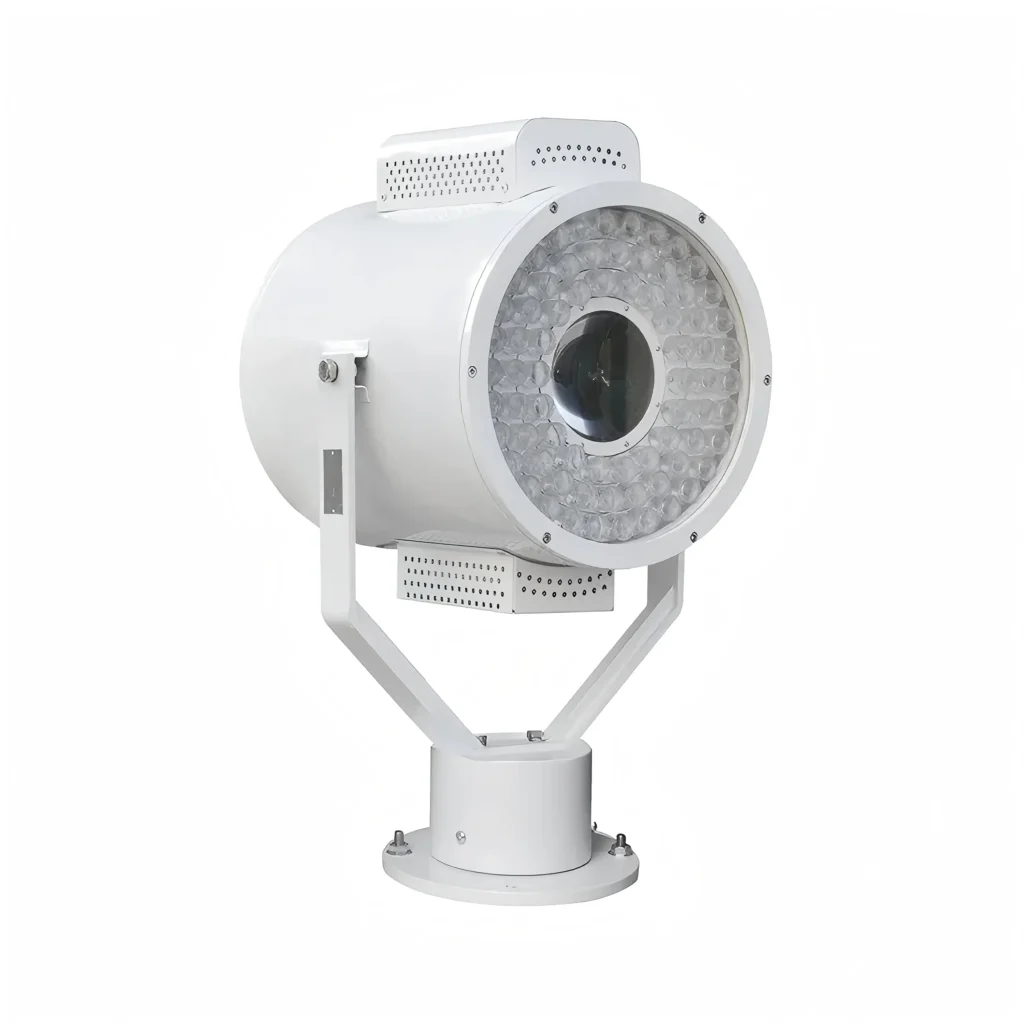
A marine searchlight is a high-intensity lighting device designed for harsh marine environments. Unlike ordinary deck lighting, their main function is not to illuminate the hull itself, but rather to project a powerful and concentrated beam of light for long-range object detection, identification and tracking.
In addition to understanding the application of commercial marine searchlights, we will also explore the various types of searchlights together.
Spotlight vs. Searchlight: Key Differences
Many people often use the words Spotlight and Searchlight interchangeably, but they have a clear difference in the professional field of navigation. Understanding this difference is the first step to avoid buying the wrong device.
Beam & Range
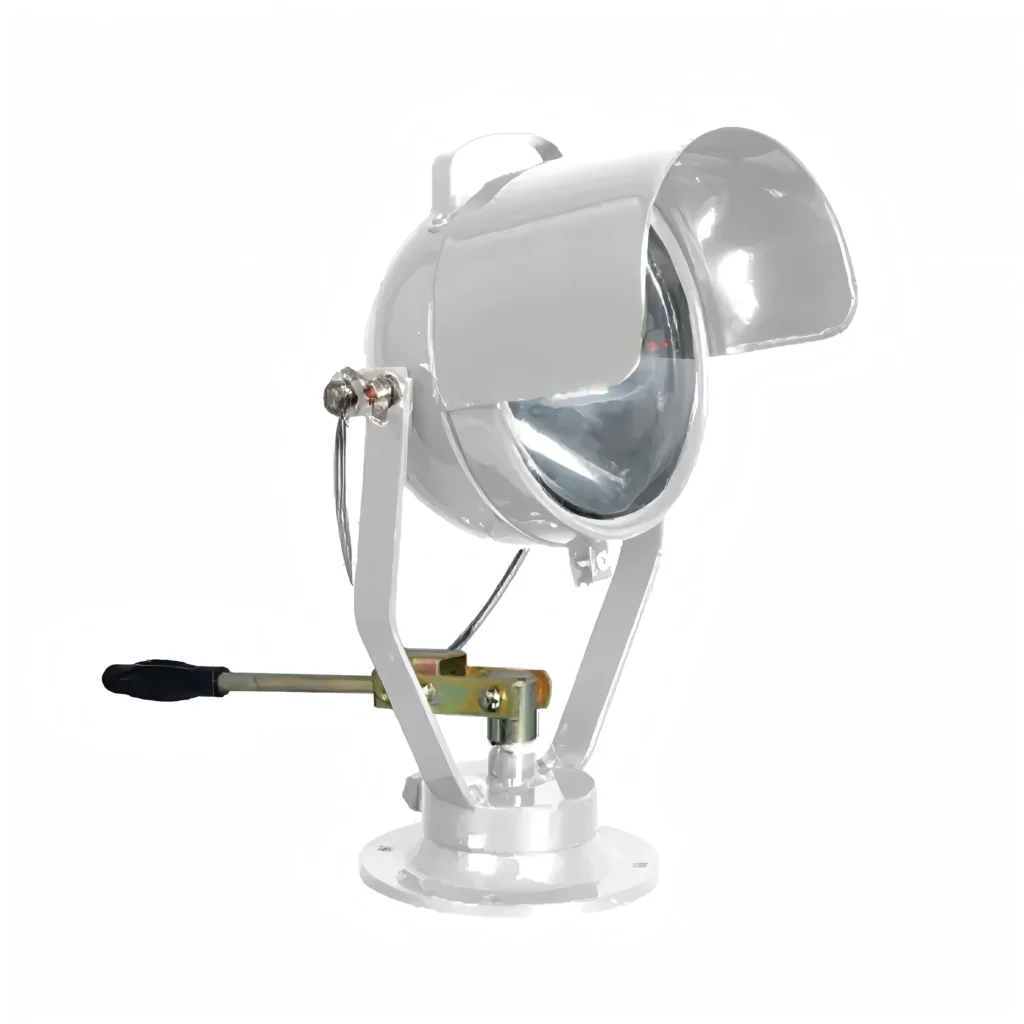
Spotlight: Usually the beam is narrow, but the power is relatively small and the range is short. They are suitable for close-range tasks such as lighting up the deck work area or viewing the conditions near the ship’s side.
Searchlights: Optical reflectors with extremely high power and precision design. They can produce extremely high-intensity light columns with a range of up to several kilometers. They are created for distance and penetration.
Operation & Durability
Spotlight: often hand-held or simple stationary and relatively light structure.
Searchlights: fixed installation usually equipped with a remote control system in the cab (electric or joystick) and its IP rating must be able to withstand the direct impact of waves.
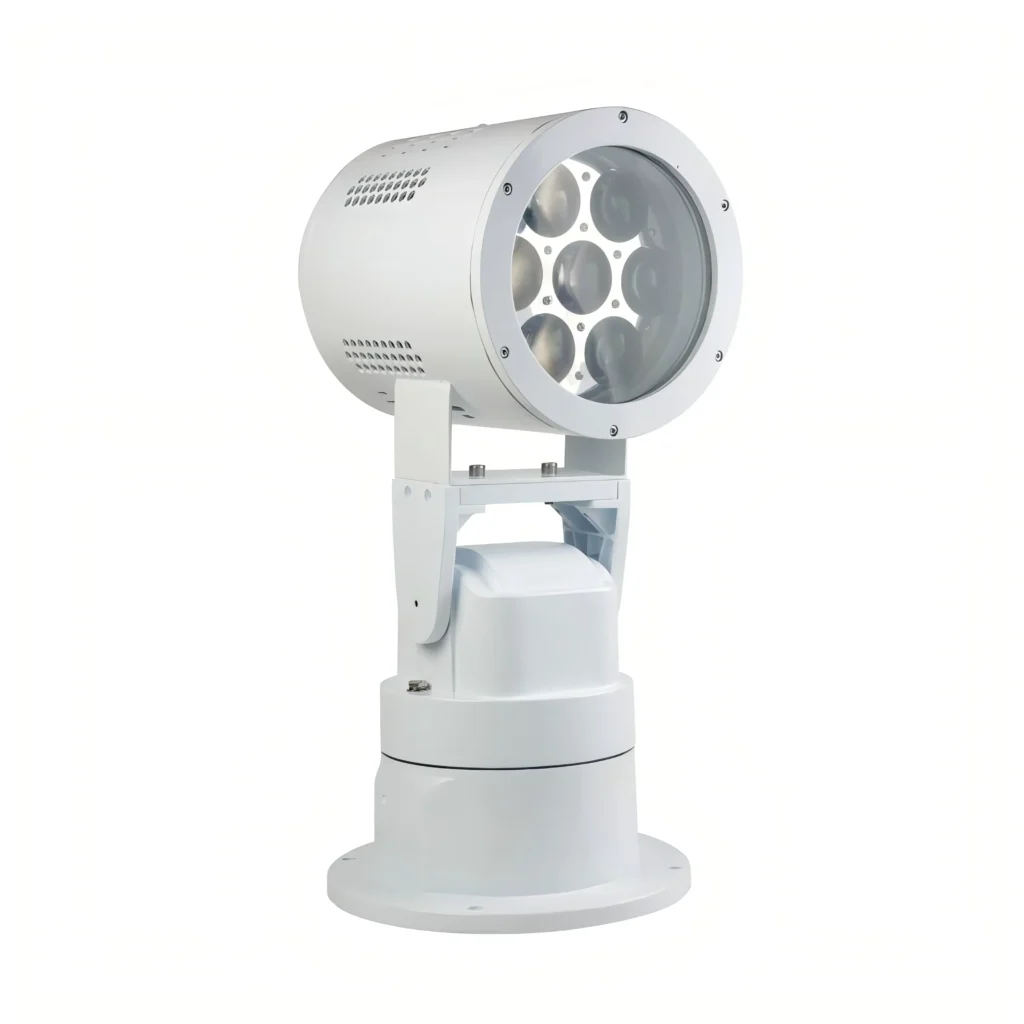
In short, if you need to see the deck 50 meters away, you need the spotlight; if you need to see a beacon 1000 meters away, you definitely need commercial searchlights.
What Are the Different Types of Commercial Marine Searchlights?
1. Spotlights for Precision
Marine spotlight is a concentrated high-intensity light source that can project concentrated beams over long distances. Spotlights are essential in the maritime environment to illuminate specific targets, assist in navigation, and identify objects or potential hazards from afar.
Application:
- Navigation: Spotlights help guide ships through complex waterways and ports.
- Search and rescue: The focused beam assists the search and rescue operation by locating people or ships in distress.
2. Floodlights for Broad Illumination
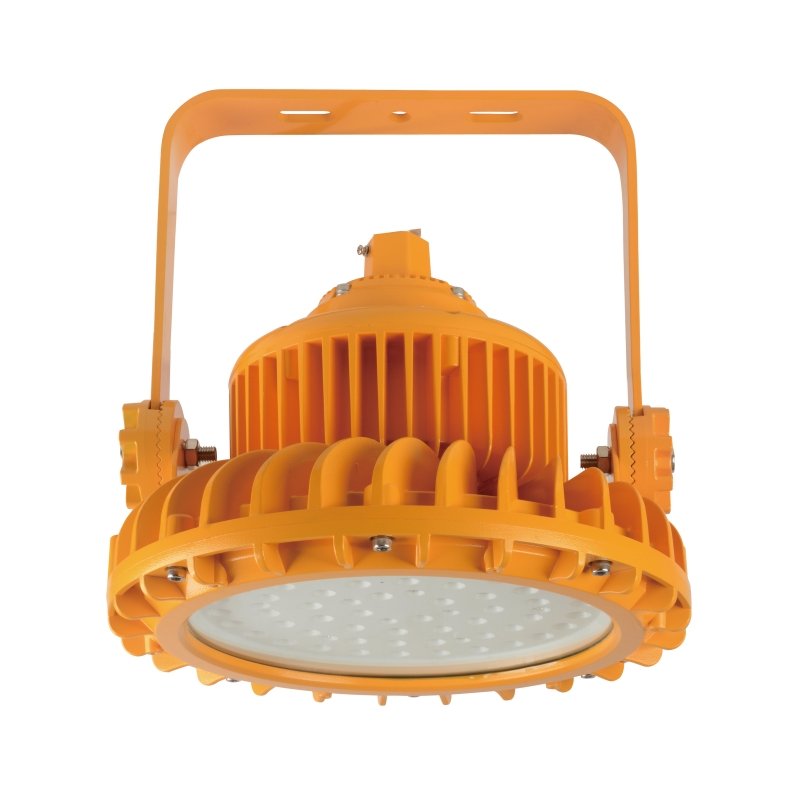
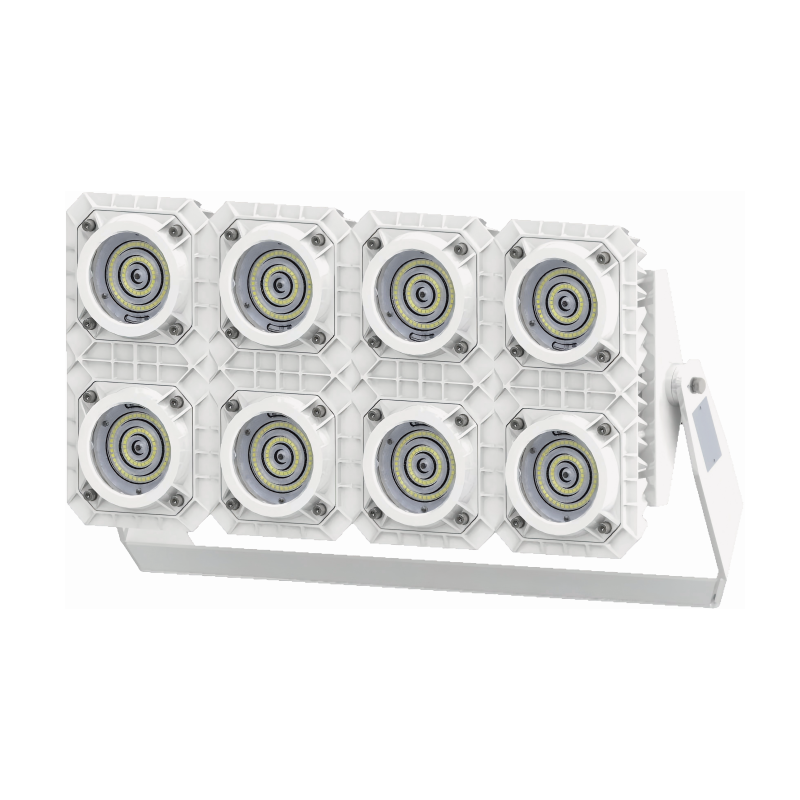
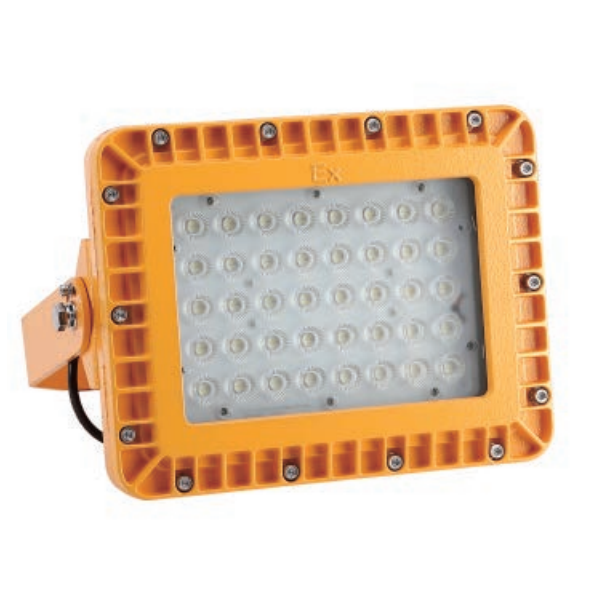
The explosion-proof floodlight emits a wide and uniform beam covering a wider range. Floodlights are used in marine environments that require a wide field of view, such as working at night or crossing areas with poor light.
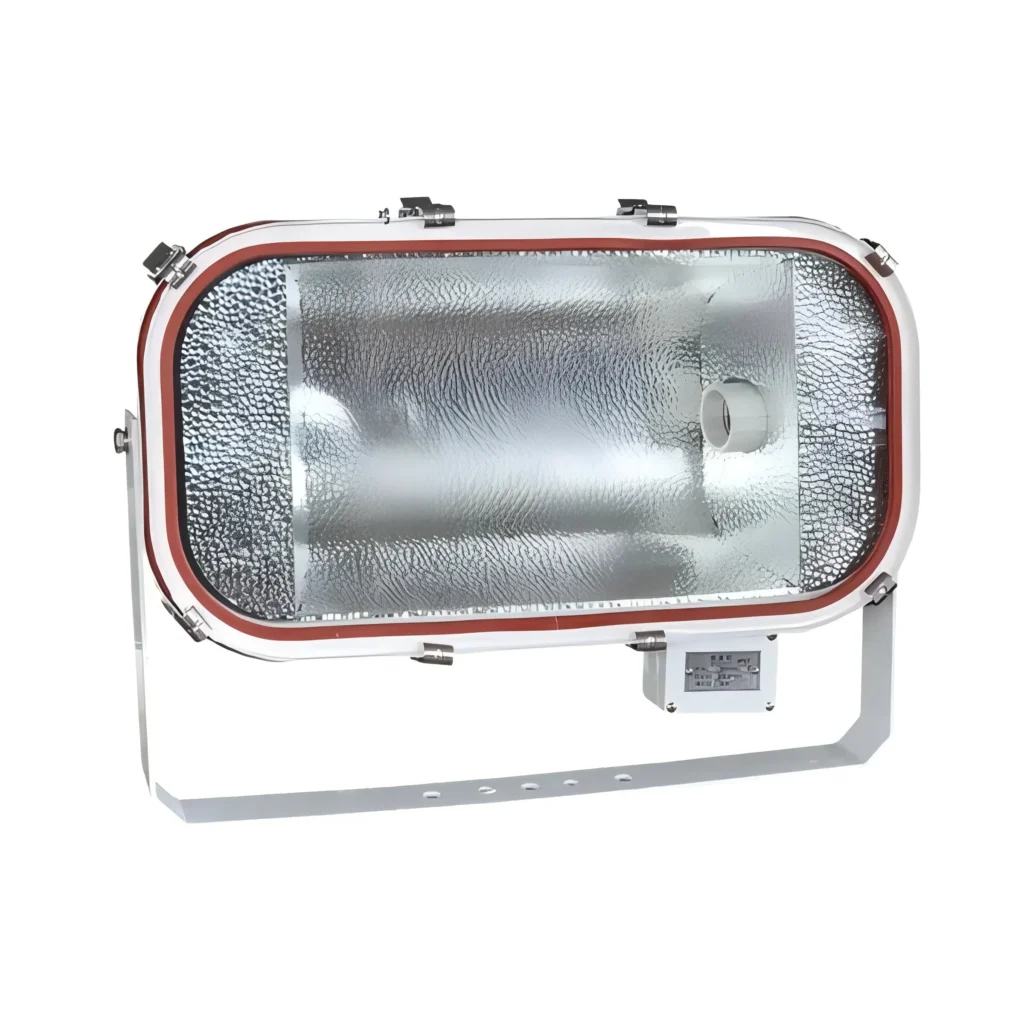
Application:
- Deck lighting: For safe navigation and cargo handling, floodlights illuminate the deck area.
- Emergency response: floodlights improve visibility in emergency situations.
3. Rotating or Pan-and-Tilt Searchlights
Rotary or translational tilted searchlights are dynamic that allow the light source to move. These searchlights can rotate horizontally, tilt vertically or perform both movements simultaneously, giving them greater versatility.
Application:
- Surveillance: Pan-and-tilt searchlights are used for monitoring and surveillance that allow the operator to focus on specific areas.
- Security: Due to the ability to move beams, these searchlights are very useful in security patrols and surveillance.
4. Remote-Controlled Searchlights
The remote-controlled searchlight can be made remotely, which is more convenient and flexible in adjusting the direction of the light line without physical intervention.
Application:
- Bridge Lighting: Remotely controlled searchlights help illuminate the ship ‘s surroundings and contribute to navigation and safety.
- Automation system: Integrated with automatic navigation system to achieve real-time data-driven control.
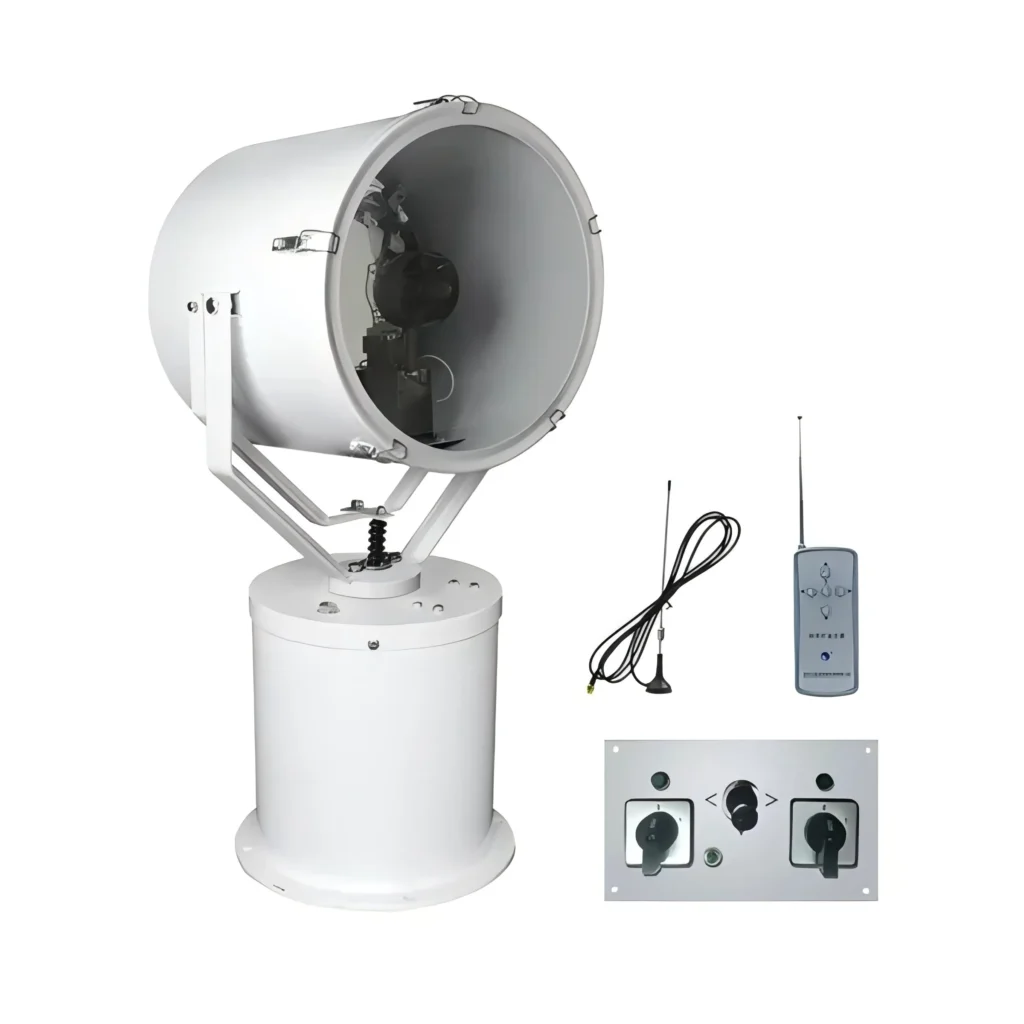
5. Infrared (IR) and thermal imaging searchlights
The working range of infrared and thermal imaging searchlights exceeds visible light that make them effective in low-light environments or complete darkness. These searchlights can detect heat sources and improve visibility.
Application:
- Night vision: Infrared and thermal imaging searchlights give night vision capabilities, which are essential for night operations.
- Safety and monitoring: These searchlights are valuable in monitoring areas where there is no visible light.
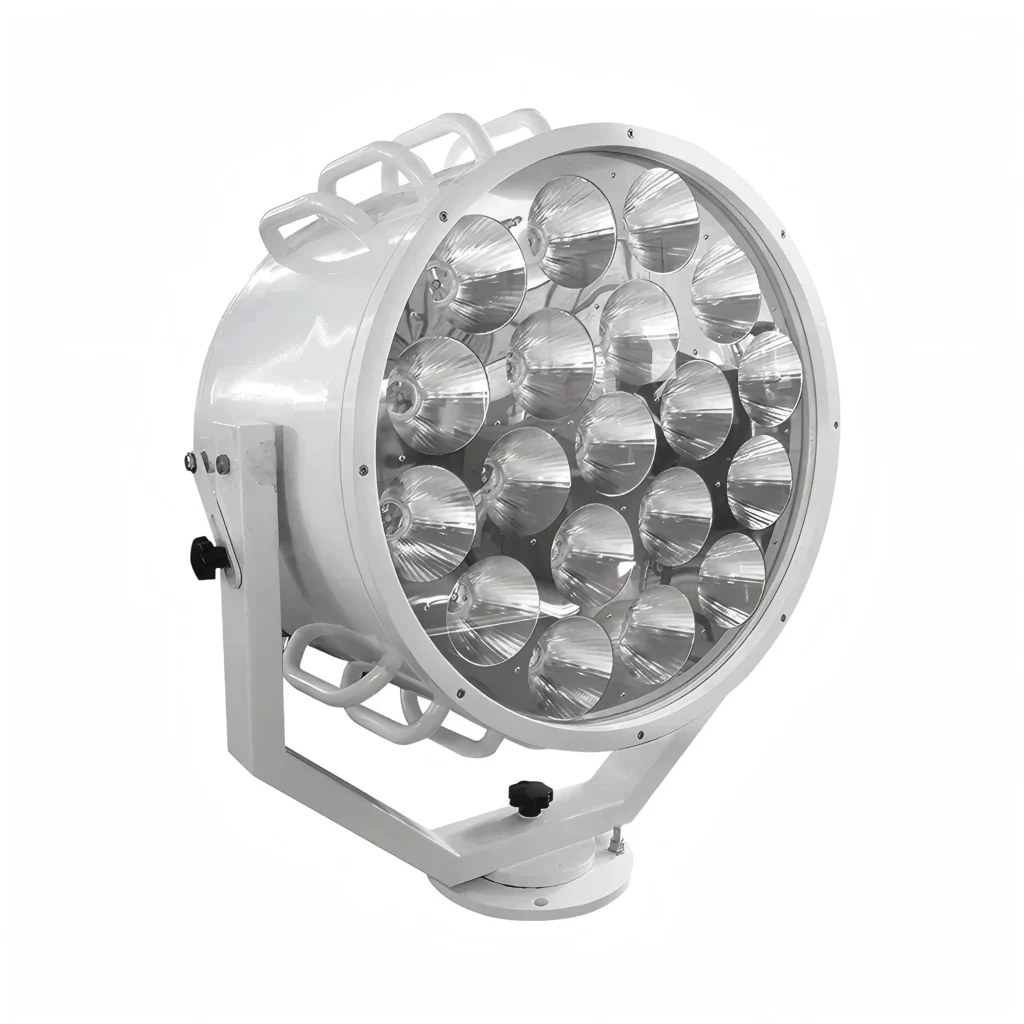
6. LED technology in Marine searchlights
LED technology has made significant progress in the field of marine searchlights that provide energy saving, durability and durability. The marine LED searchlight provides bright lighting and reduces power consumption.
Application:
- Energy efficiency: LED searchlights help save energy and are essential for ships with limited power.
- Durability: The extended service life of LED fixtures reduces maintenance requirements and improves reliability.
Factors to Consider for Choosing the Suitable Type of Marine Searchlights
The importance of choosing the right type of marine searchlights for ship operators cannot be overstated, given the critical role these lights play in navigation, safety and emergency response at sea.
1. Light source
As mentioned above, there are many types of proven lamps, including halogen lamps, LEDs, xenon lamps, etc. LED searchlights are energy-saving, durable, long life that is suitable for long-term use; xenon searchlights have high brightness but high power consumption. Selection should be based on energy efficiency and maintenance cost assessment.
2. Luminance and lighting range
Large commercial ships or search-and-rescue requirements need higher brightness in response to fog or remote observation.
3.Waterproof and corrosion resistance
The marine environment is humid and salt foggy. Select IP67 or higher waterproof marine light fixtures, and use stainless steel or aluminum alloy materials to prevent corrosion.
4.Power requirements and energy efficiency
Considering the limited power supply of the ship, low-power LED searchlights are preferred. Power supply types include electric, battery or hybrid to ensure compatibility with ship power generation systems.
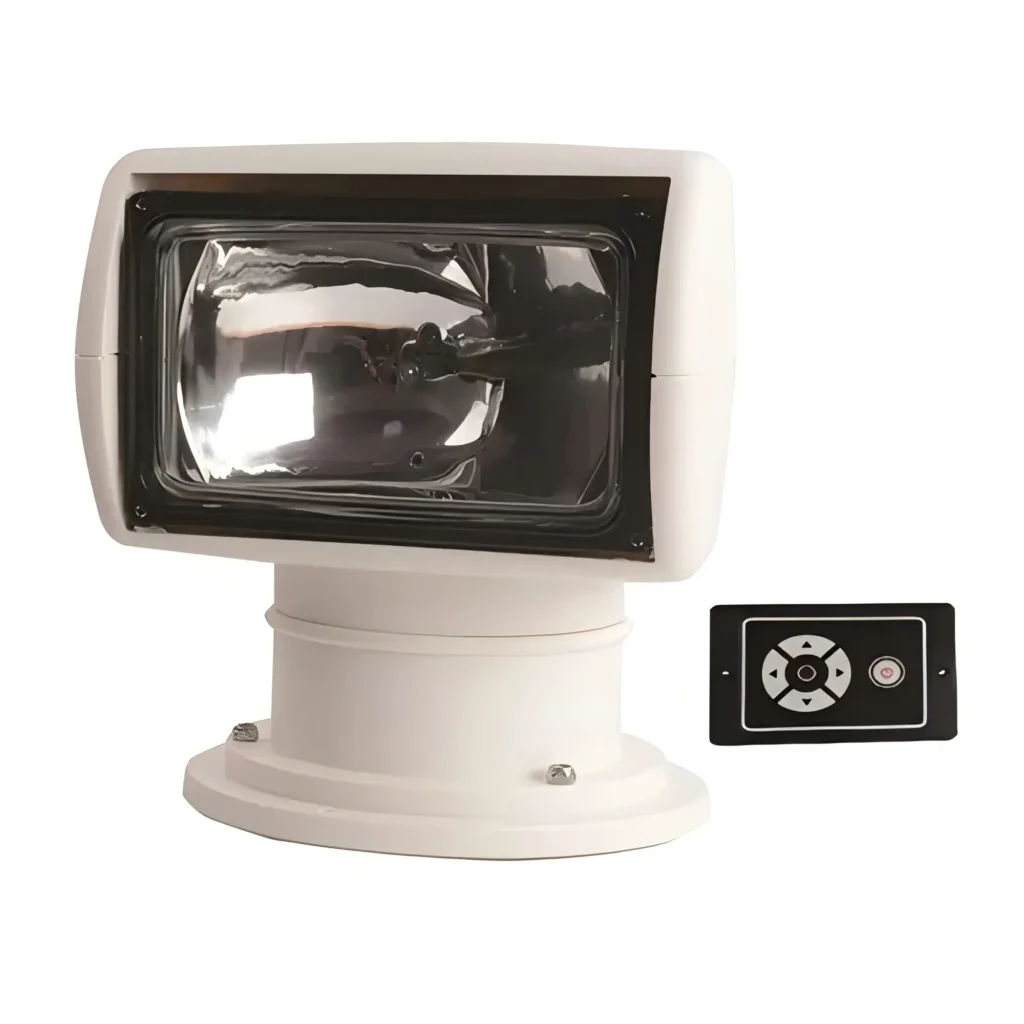
5. Installation and control mechanisms
Installation methods are fixed, remote control rotary or manual adjustment. Large commercial ships need remote control models to facilitate deck or bridge operation.
6. Type of ship and purpose of use
Common types of ships are small leisure boats and commercial cargo ships. Search and rescue ships need long-distance highlight lights and fishing vessels emphasize durability and waterproofness. It is also necessary to consider the operating environment such as polar or tropical.
7. Regulatory compliance and reliability
Marine light fixtures should comply with IMO, SOLAS or USCG standards to ensure safety certification. Choose a reliable marine brand to ensure impact resistance and long-term reliability and reduce maintenance costs.
Get a Quote
Choosing the right commercial marine searchlight is not just to buy a light bulb, but to invest in the safety and operational efficiency of the ship. From fog-penetrating halogen searchlights, to highly efficient and durable LED searchlights, to ultra-long-range xenon searchlights, each technology has its own applicable scenarios.
Bozhou Marine is well aware of the harsh marine environment. We are committed to providing you with brightness standards and also withstand the test of wind and waves of the searchlight solution.
If you still have questions about which light source to choose, please contact our expert team at any time.