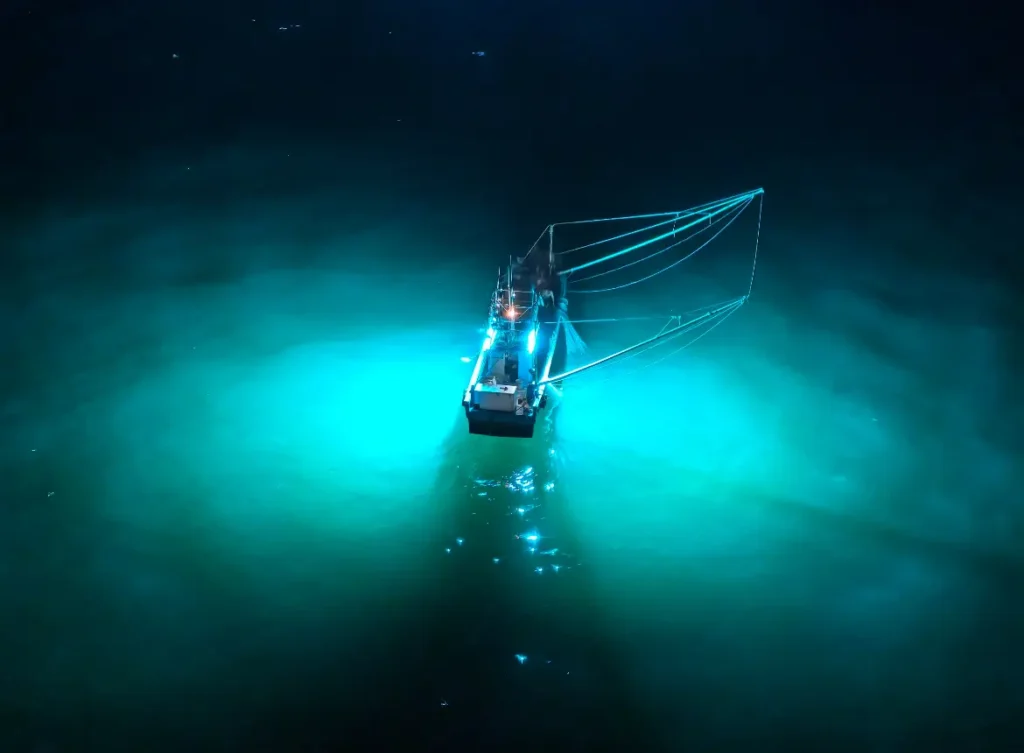
Night navigation at sea is equal parts challenging and rewarding. A calm evening cruise can turn stressful if a buoy, log, or unlit vessel appears in your path. That’s where a marine spotlight proves essential.
Unlike navigation lights, which make your vessel visible to others, a spotlight gives you the power to actively scan your surroundings. It’s not a luxury—it’s a safety tool that can mean the difference between a smooth passage and a dangerous collision.
Selecting the Right Spotlight
Choosing a spotlight isn’t about picking the brightest model on the shelf. The ideal choice balances durability, superior lighting performance, and power requirements to match both your vessel and navigation conditions.
Power Source (Battery vs. Wired)
- Portable spotlights: rechargeable, flexible and battery-powered handhelds. Best for small boats or as backups.
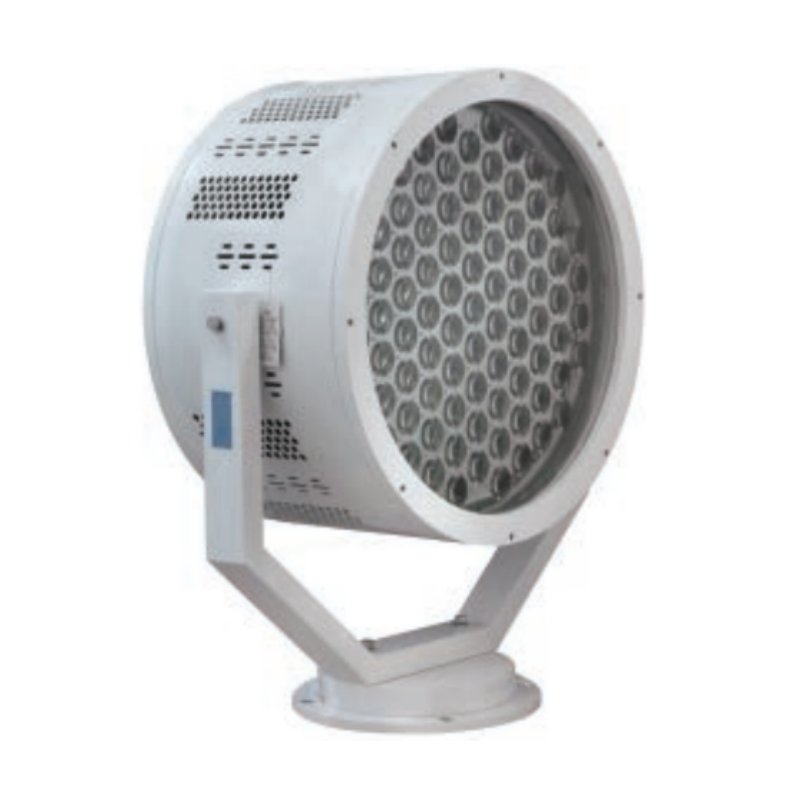
- Wired Fixed spotlights: Permanently mounted, often remote-controlled, and always ready. Ideal for larger boats or frequent night passages.
Beam Characteristics (Lumens vs. Candela)
- Lumens measure total light output (brightness).
- Candela measures beam intensity (throw distance).
If you cruise offshore, prioritize candela—you need a narrow pencil beam to spot distant buoys. For use in docking or marina settings, a broad beam with high lumen output offers greater practicality. Compare it to a handheld light: a wide beam for illuminating the campsite, a narrow beam for pinpointing distant path indicators.

Waterproofing & Durability
Spotlights face salt spray, rain, vibration, and the occasional drop. Look for models with IP67 or IP68 waterproof ratings, which guarantee dust protection and resistance to immersion. Rubber-armored housings add shock protection and grip. Many modern handheld units even float—a practical feature if one slips overboard during rough seas.
Light Technology (LED, Xenon, Halogen)
- LED: Long lifespan, energy-efficient, compact, and cool-running. The go-to for most recreational and professional boaters.
- Xenon (HID): Extremely bright and excellent for long-distance spotting but more expensive and power-hungry.
- Halogen: Inexpensive and widely available but outdated. They consume power rapidly and have a shorter operational lifespan.
For most boaters, LEDs strike the sweet spot: reliable, efficient, and bright without draining your power system.
Mounting the Spotlight
A spotlight’s effectiveness depends not just on its power, but also on where and how it’s mounted.
Portable vs. Fixed
- Portable spotlights: Versatile, convenient to store, and perfect for use as secondary lighting. However, they tie up a crewmember’s hands.
- Fixed spotlights: Typically mounted on the forward section, mast top, or rigid cockpit canopy. These often come with remote controls, letting you aim from the helm without leaving your seat.
Optimal Mount Locations
- Bow: Best for detecting hazards directly ahead.
- Hardtop or Cabin Roof: Adds height, improving reach and reducing glare.
- Masthead: Delivers the greatest visibility but may present more maintenance challenges.
Wiring and Installation Best Practices
- Use marine-grade tinned copper wiring to resist corrosion.
- Route cables through waterproof grommets and seal connections with heat-shrink tubing.
- Place switches or remotes where they can be reached without leaving the helm.
Test polarity before sealing connections on an LED spotlight. An error during installation can cause irreversible harm to the device.

Tips for Effective Use
Even the most advanced spotlight won’t help if used carelessly. Technique matters.
- Avoiding Glare & Night Blindness
Keep beams aimed slightly downward and sweep the area instead of shining continuously. Reflections from rails or waves can ruin your night vision. Some spotlights have visors or shields to reduce glare. - Battery and Power Management
Handheld users should carry spare batteries or keep units fully charged. Wired units need regular checks for corrosion or loose terminals to prevent sudden power loss. - Tactical Beam Use
Use short bursts to scan for distant objects, then switch to flood mode when docking or mooring.
Like that a yacht crew trained themselves to sweep the horizon in 3-second bursts instead of leaving beams on continuously. The practice reduced eye fatigue and kept them from blinding nearby sailors.
Comparison Table of Spotlight Options
| Spotlight Type | Pros | Cons | Best Use Case |
| Handheld LED | Portable, rechargeable, efficient | Requires charging, easy to drop | Small boats, backups |
| Wired Fixed LED | Reliable, remote-controlled, bright | Requires installation effort | Offshore cruising, patrols |
| Xenon HID | Extremely bright, long-distance | Expensive, power-hungry | Search & rescue |
| Halogen | Low upfront cost | Short lifespan, inefficient | Budget or temporary setups |
A spotlight is more than just extra lighting—it’s your eyes at night. The right choice, mounted smartly and used with discipline, transforms nighttime navigation from nerve-wracking to confident.
Key takeaway: Match your spotlight to your vessel and waters. Offshore? Go for high-candela fixed LEDs. Docking at marinas? Keep a wide-beam handheld on standby. A thoughtful approach keeps your crew safe and your passages smooth.