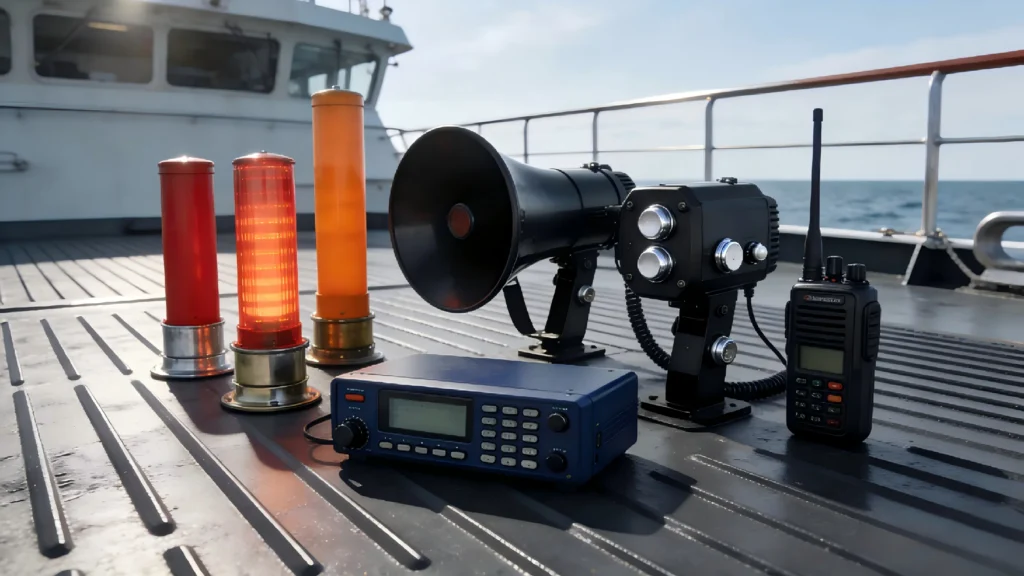
As you navigate open waters, fully preparation is the key between a good day and a disaster. Marine signal products are a vital link between you and rescue services in an emergency. Whether you’re sailing in thick fog or experiencing engine failure late at night, having the right signal equipment ensures that you’re ‘seen’ and ‘heard’.
However, what does a complete set of safety equipment contain?
This guide will provide you with a detailed breakdown of the four main categories of marine signal products. We will explore their working principles and how to choose the right equipment for your vessel.
What Are Marine Signal Products?
Marine signal products are equipment used by seafarers to convey intentions to other vessels or send distress signals to potential rescuers. They are usually divided into two categories: visual signals and sound signals. According to the United States Coast Guard (USCG) and the International Regulations for Preventing Collisions at Sea (COLREGs), vessels must carry specific signal devices according to their size and navigation area.
In order to ensure that you are fully protected, you need to understand the four pillars of maritime signals :
- Marine Signal Lights
- Flares and Pyrotechnics
- Sound Devices
- Electronic Devices
Marine Signal Lights
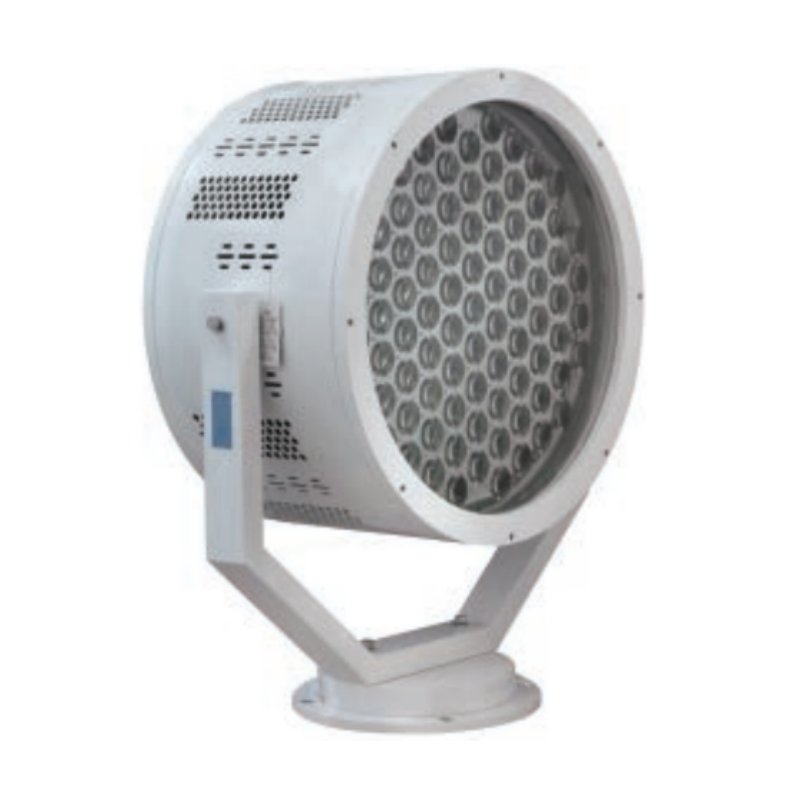
Visibility is your first line of defense. Marine signal lights have two uses : to prevent collisions by marking your location and status, and to attract attention in emergency situations.
Navigation Lights

Every vessel sailing between sunset and sunrise must display navigation lights. These are standard marine signal products designed to convey direction.
- Sidelights: Red (port) and green (starboard).
- Sternlight: White light visible from the rear.
- Masthead Light: White light shining forward.
Emergency Strobe Lights
Navigation lights are used to prevent accidents, while strobe lights are designed for distress. High-intensity strobe lights mounted on life jackets (PFD) are vital personal marine signal products. These lights are usually activated automatically when they come into contact with the water surface that provide visual targets for rescuers in the dark.
BOZHOU tips : It is recommended to upgrade to LED navigation lights. Compared with traditional incandescent bulbs, they consume less battery power and have a longer life, ensuring that your signal never drops the chain when it is most needed.

Marine Flares and Pyrotechnics
When most people think of marine signal products, what often emerges in their minds is a flare that shoots into the sky. The pyrotechnic signal is a traditional visual distress signal ( VDS ), which is still mandatory for many vessels operating in coastal waters and high seas.
Handheld Flares
The red hand-held flame signal is designed for daytime and nighttime use. When potential rescuers are already within sight, they can pinpoint your location with high-intensity combustion.
- Duration: Usually the burning time is up to 3 minutes.
- Visibility: High visibility, but limited by the horizon.
Aerial Flares
An aerial flare (such as a parachute rocket signal or a meteor signal) is used to attract attention over long distances. They are launched at high altitudes (usually over 300 meters) to alert vessels or aircraft beyond the horizon.
SOLAS Grade: For offshore voyages, make sure your marine signal products are SOLAS (International Convention for the Safety of Life at Sea) certified as they burn brighter and longer.
Smoke Signals
The orange smoke signal is designed for daytime use. They produce a lot of bright orange smoke, which is very effective for signal to rescue helicopters.
Safety Warning: Pyrotechnic signal will expire. Please check the date of the flare every year. Expired flares may not be fired, and there are security risks. Please be sure to dispose of old marine signal products at approved hazardous waste treatment facilities.
Sound Marine Signaling Device
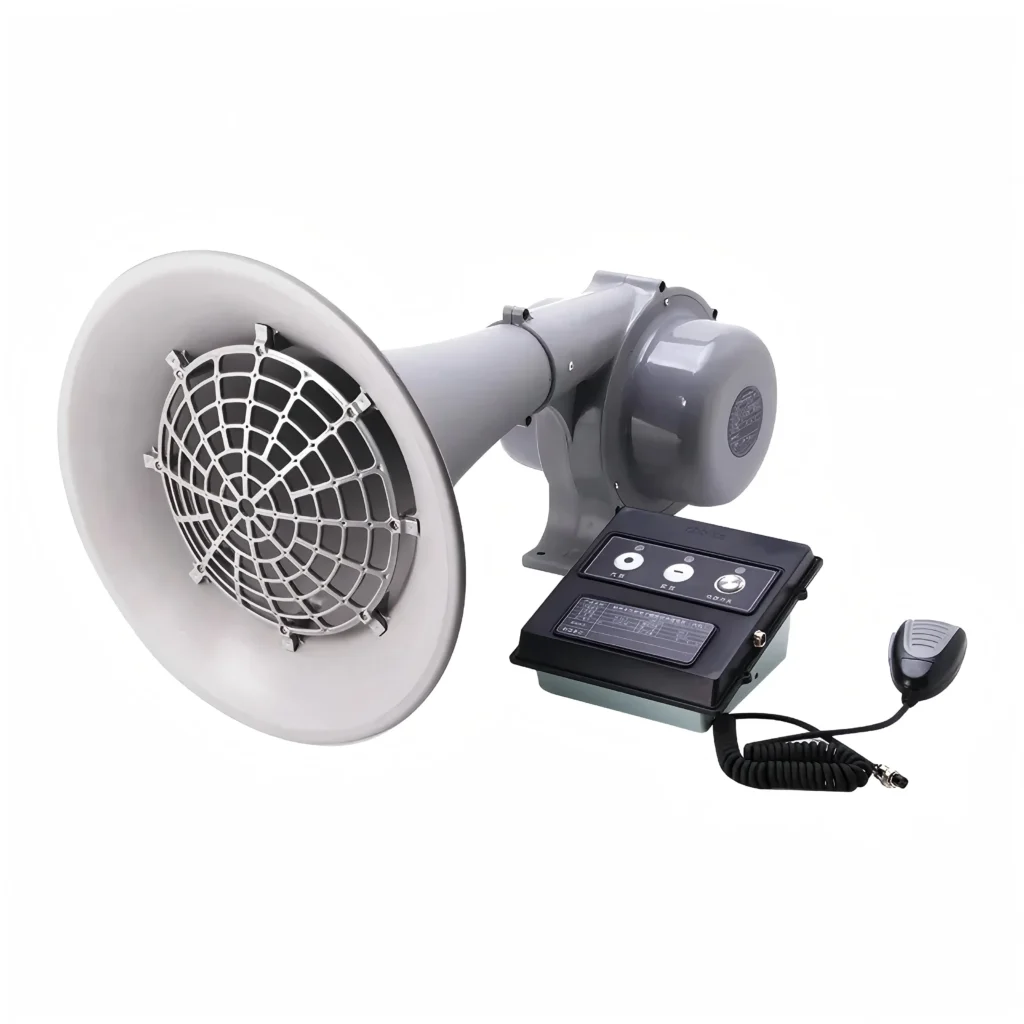
The visual signal is useless at the corner of a foggy or blind spot. This is the reason why sound-based marine signal products have become mandatory. Sound signals are used both for distress alerts and to convey maneuvering intentions (e.g., overtaking from port).
Whistles and Bells
For smaller vessels (below 12 meters), a simple and efficient whistle is usually sufficient to meet legal requirements.
- Whistle: must be heard at least 0.5 nautical miles away.
- Bells: Vessels of 20 meters or larger must be equipped to indicate the mooring position when visibility is limited.
Air Horns
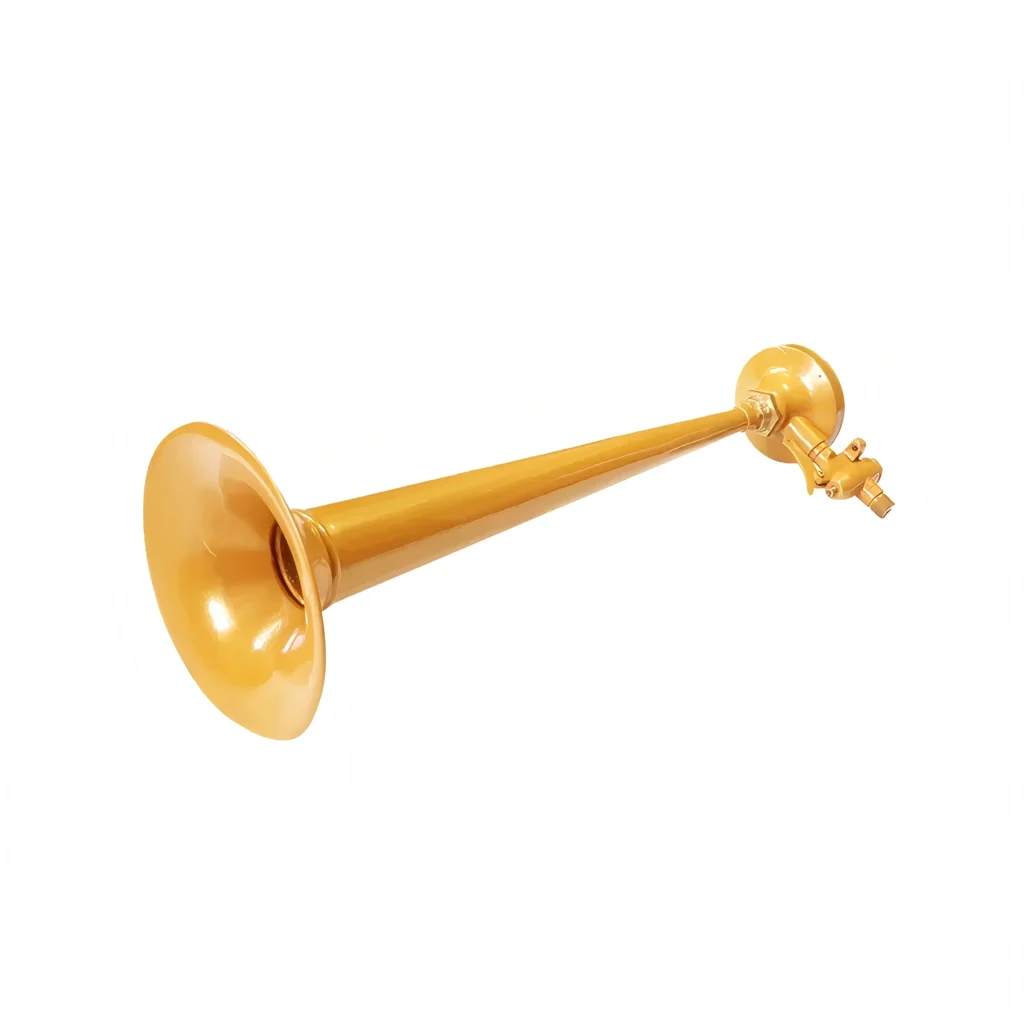
Compressed air horn is a powerful marine signal product, which can transmit sound to a long distance. They are essential for sending danger or distress signals (five short sounds).
- Handheld Canisters: Portable and loud, but the air may run out. Be sure to bring a spare gas tank.
- Fixed Horns: 12V system connected to the vessel for reliable, unlimited use.
- Distress Sound Signal: The continuous sound of any fog signal equipment is regarded as a distress signal in case of emergency.
Electronic Marine Signal Devices
We are in the golden age of safe navigation. Electronic marine signal products are rapidly replacing traditional pyrotechnic signals because they are safer, reusable and often more effective.
EPIRBs and PLBs
EPIRB (Emergency Position Indicating Radio Beacon): Registered in the name of the vessel. Once activated, it sends a signal to the satellite to inform the search and rescue force of your exact location.
PLB (Personal Locator Beacon): Registered in a personal name. It is small in size and can be installed on a life jacket.
Electronic Visual Distress Signals (eVDSD)
The U.S. Coast Guard (USCG) now accepts certain electronic lights as an alternative to pyrotechnics. These LED devices flash specific SOS modes (Morse code) with visible and infrared light.
Pros: No expiry limit, battery powered, test safety, no fire hazard.
AIS (Automatic Identification System)
Although it is mainly a navigation tool, AIS MOB (Main Overboard) equipment is a professional marine signal product. If the crew falls into the water, the device sends a signal to all nearby vessels equipped with AIS and marks the location of the person in distress on its GPS chart plotter.
Comparison: Traditional vs. Modern Signal Products
To help you decide which marine signal products to prioritize, here’s a comparison of their features.
| Comparison Table: Traditional vs. Modern Signal Products | ||
|---|---|---|
| Feature | Pyrotechnic Flares | Electronic Signals (LED/EPIRB) |
| Lifespan | Expires every 42 months | Indefinite (Change batteries) |
| Safety | Fire hazard, hot slag | Safe to touch, waterproof |
| Visibility | Intense but short (minutes) | Long duration (hours/days) |
| Cost | Low initial cost | Higher investment |
| Environmental | Hazardous waste | Electronic waste (Recyclable) |
Conclusion
Investing in high-quality marine signal products is the most responsible decision that you can make. Whether you choose a traditional and reliable pyrotechnic flare or a modern and efficient electronic SOS beacon, the goal is the same : to be seen, to be heard, and to go home safely.
Please make a thorough inventory before the next voyage. Check the life of your flare, test your speakers, and make sure your beacon battery is fully charged.
For more information on navigation safety regulations, please visit the U.S.Coast Guard Boating Safety Division.
FAQ
It depends on your vessel size and sailing position. However, in order to obtain maximum safety, it is recommended to carry a hybrid type of equipment, including visual ( light / flare ), sound ( horn ) and electronic ( EPIRB ) equipment, to respond to different emergencies.
Mobile phone can be used as a backup means, but it is not a distress signal recognized by maritime law. It relies on a mobile phone signal tower, and there is usually no signal when sailing offshore, and the phone is not waterproof. Special marine signal products such as VHF radio and PLB are much more reliable.
Do not throw expired flares into ordinary household waste, because they still contain dangerous explosive chemicals. Please contact your local hazardous waste management agency, fire department, or consult the local Coast Guard Auxiliary Team to organize a ‘ Bullet Recovery Day ‘ event for safe disposal.
Yes. Some marine signal products ( such as orange smoke ) are only effective during the day, while red flares are most visible at night. The U.S.Coast Guard usually requires vessels to carry a combination that can meet both daytime and nighttime needs ( for example : three hand-held red light flares for day and night, or an electronic rescue lamp plus a daytime rescue flag ).
Store your vessel’s marine signal products in a dry, waterproof and easy-to-access container ( such as a dedicated emergency access package ). In an emergency, every second is critical, and you won ‘t have time to rummage through the equipment at the bottom of the locker. It is recommended to place it near the bridge or on the escape route.