Imagine that you are moored in a beautiful bay ready to enjoy lunch, as a result of a passing yacht set off a tail wave that overturned your drink, and the passengers around panicked to find the handrails. Ship shaking is the main cause of seasickness and fatigue. The anti-rolling gyro came in handy.
The anti-rolling gyro has changed the maritime industry and provided a solution to the ancient problem of rowing. Whether you’re a sport angler waiting for a fish bite or a luxury yacht owner entertaining guests, the anti-sway gyroscope (often referred to as the ARG) ensures a stable and comfortable platform in all sea conditions.
In this guide, we’ll explore in depth what this technology is, how it works against wave energy, and why it’s superior to traditional roll reduction methods.
What Is Anti-Rolling Gyro?

Anti-rolling gyro is an ocean stabilizing device that reduces the resonant rolling motion of ships. Unlike traditional stabilizers that rely on external fins and water flow, ARG operates completely inside the hull.
The anti-rolling gyro utilizes a heavy-duty flywheel that rotates at high speed within a universal frame. When the ship attempts to roll due to waves or wind, the gyroscope will generate a strong torque to counteract this motion. This results in a significant reduction in roll amplitude (can usually be reduced by up to 90%) that creates a stable environment for everyone on board.
How Does an Anti-Rolling Gyro Work?
The core principle of the anti-rolling gyro involves a rotating flywheel that resists its direction change.
The Physics of Precession
When the ship rolls under the action of waves, the anti-rolling gyro senses this rotation immediately. The high-speed rotating flywheel inside produces forward and backward pitch motion (precession) on the universal frame. This precession generates a strong gyroscopic reaction moment, which strongly supports the down-dip side of the hull and pulls the up-side back to achieve anti-rolling stability.
The working process of anti-rolling gyro:
- Step 1: The flywheel rotates at a high RPM (revolution per minute).
- Step 2: Waves cause the ship to roll.
- Step 3: The gyroscope responds to rolling and tilts (precession).
- Step 4: Generate reaction moment and neutralize wave energy.
Main Benefits of Installing Anti-Rolling Gyro
Why do yacht manufacturers and refitters have a surge in demand for anti-rolling gyro? The following are its main advantages:
- Seasickness Elimination: By removing repetitive rolling motion, the primary trigger for motion seasickness is eliminated.
- Safety: Deck stability makes it safer for children and elderly passengers to move on board.
- No External Resistance: Since the anti-rolling gyro is internal, there are no protruding fins outside the hull. This means that there is no speed loss and no risk of winding fishing nets or ropes.
- Quiet Operation: Modern equipment is designed to operate silently that allow you to enjoy peace and quiet while staying overnight in the anchorage.
- Increased Resale Value: Ships equipped with stabilization systems can usually sell at higher prices in the second-hand market.
Anti-Rolling Gyro vs. Fin Stabilizer: Which is Better?
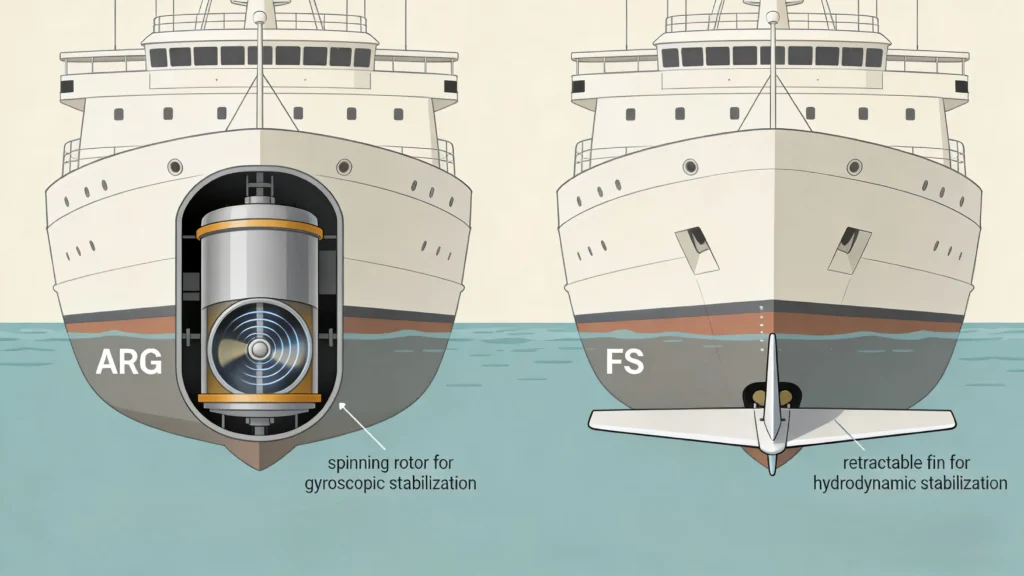
When choosing a stabilization system, the debate often boils down to Gyros vs. Fins.
| Comparison Table of Anti-Rolling Gyro and Fin Stabilizer | ||
|---|---|---|
| Feature | Anti-Rolling Gyro (ARG) | Fin Stabilizers |
| Performance at Anchor | Excellent (100% effective) | Poor(requires “zero speed” add-ons) |
| Performance at Speed | Good | Excellent |
| Drag/Fuel Efficiency | No Drag (Internal) | Creates Drag (External) |
| Vulnerability | Protected inside hull | Exposed to debris/grounding |
| Installation | Flexible placement | Specific hull location required |
| Maintenance | Low (sealed bearings) | High (seals, hydraulics) |
Anti-roiling gyro is a better choice for most leisure boat owners who spend a lot of time drifting, fishing or anchoring.
Installation Requirements of Anti-Roiling Gyro: Can Your Ship be Installed?
Installing a gyro is a major project, but it is feasible for many existing ships.
Space and Structure
The anti-roiling gyro produces huge torque, so it must be bolted to a reinforced structural grid integrated with the hull keel. However, unlike fin stabilizers, anti-rolling gyros do not need to be mounted on the center line. As long as the structure is strong, it can be placed in a position away from the center, in the cabin, or even in the aft storage cabin.
Power Consumption
The anti-roiling gyro requires electricity to rotate the flywheel and manage the hydraulic or braking system.
Start-Up (Spool-Up): High power consumption (generator or shore power required).
Operation: medium power consumption.
Cooling: Many devices are water-cooled and need to be connected to a sea water pump.
The Bozhou Marine team suggests that before modifying the ARG, it is necessary to consult a certified shipbuilding engineer to ensure that your hull structure can withstand the anti-rolling moment.
Maintenance Tips for Prolonging the Longevity of Anti-Roiling Gyro
In order to ensure your investment is durable, please follow the following maintenance steps:
- Visual Inspection: Regularly check the mounting bolts and frames for signs of stress or corrosion.
- Cooling System: If it is a water cooling system, regularly check the zinc anode (zinc block) and filter to prevent overheating.
- Professional Services: Every year please certified technical personnel to check the universal joint bearing and braking system.
Is It Worth Investing in Anti-Roiling Gyros?
If you pursue the ultimate quality of navigation, then the investment anti-rolling gyro is undoubtedly a wise move. As the most valuable upgrade project on the ship, it can fundamentally eliminate the discomfort caused by turbulence-guests are no longer plagued by seasickness, and the items in the ship are stable as rocks. Although the initial investment is expensive, considering its significant improvement in comfort and safety, as well as its positive impact on the resale value of ships, this cost is a very far-sighted decision for rigorous shipowners.

We offer not only anti-roiling gyros, but also a wide range of equipment to cope with a variety of complex marine environments:
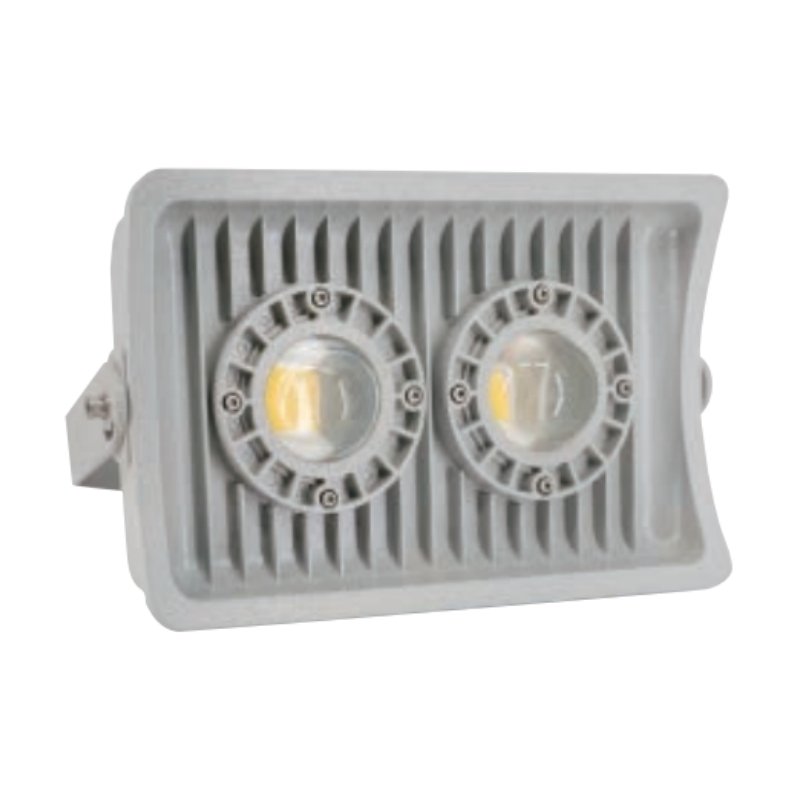
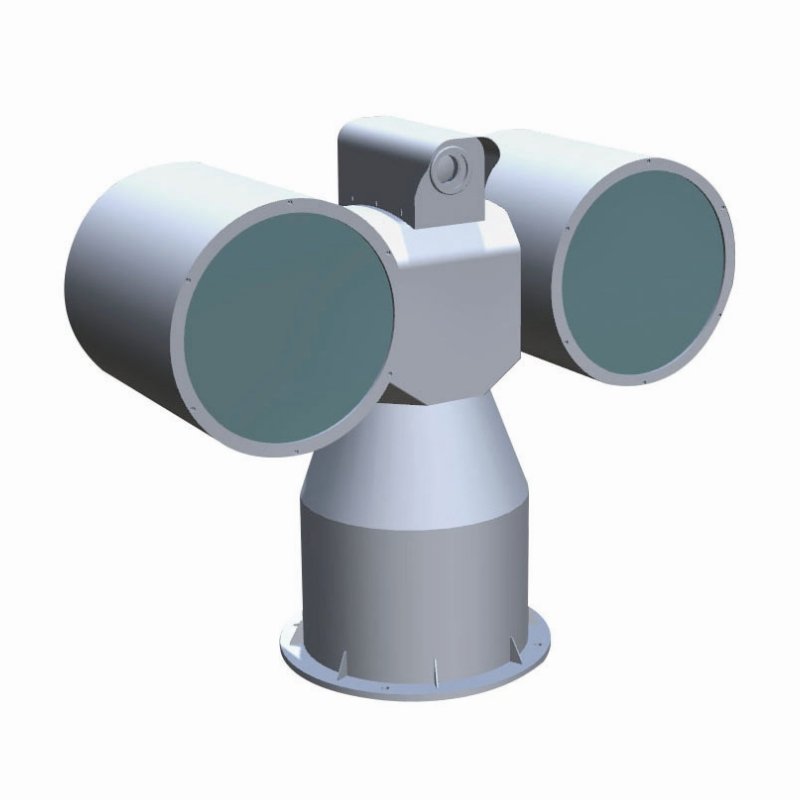
- Ensure Navigation Safety: Use our Marine Navigation Signal Light to maintain clear signal transmission in any sea condition.
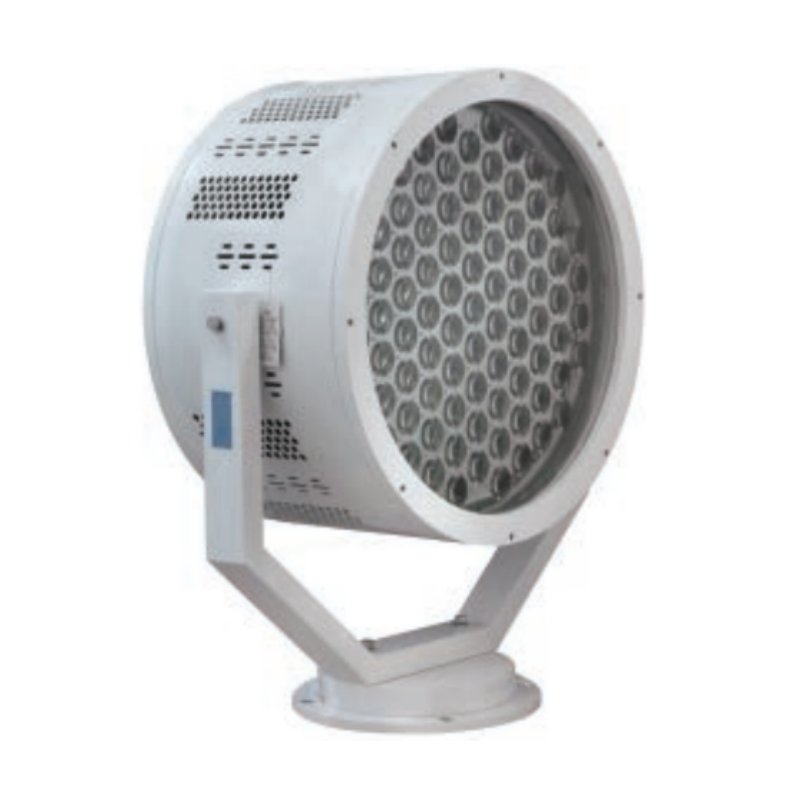
- Enhanced Operational Vision: Whether it is night search and rescue or deck operations, Marine Search Light & Flood Light can provide day-like lighting effects.
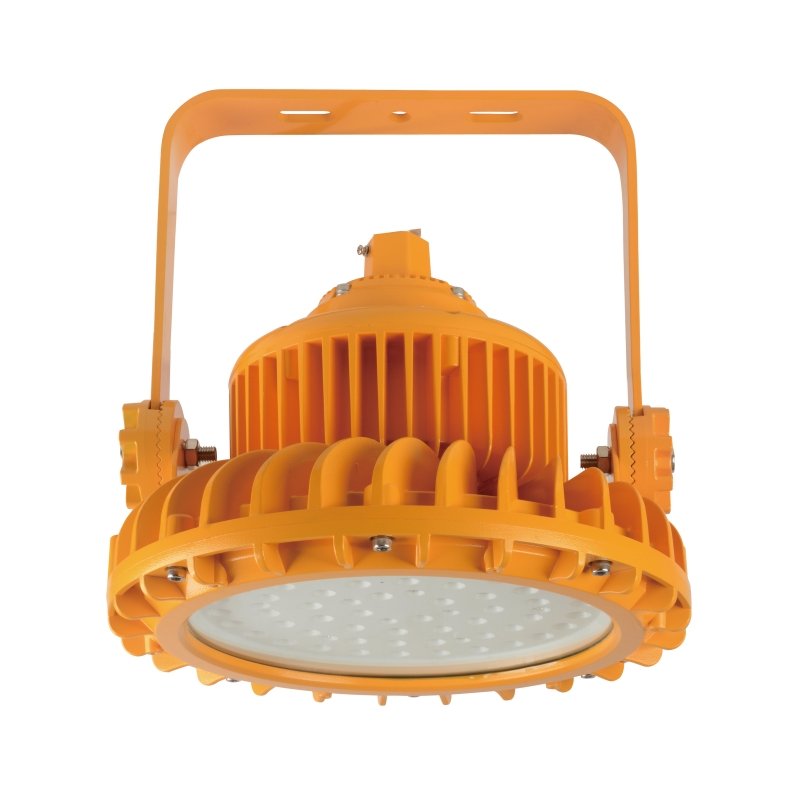
- Hazardous Area Protection: For high-risk areas such as the engine room, we provide certified Marine Explosion Proof Light to eliminate safety hazards.
- Basic Lighting in the Cabin: economical and durable Marine Fluorescent Light and Marine Incandescent Light to meet the daily lighting needs of various types of cabins.
- Power Transmission Core: Don’t ignore the importance of connectivity, use a dedicated Marine Electrical Connector to ensure that your anti-roiling gyro and lighting systems have the most stable power supply.
FAQ
Yes. Although there is no system that can prevent motion in a hurricane, the anti-roiling gyro is very effective in typical cruise conditions and rough seas and can significantly reduce the gravitational acceleration felt by passengers.
Since the heavy flywheel needs to reach a very high speed, the start-up time (spool-up) depends on the model, usually between 30 and 45 minutes. However, many modern systems allow you to unlock and use stabilizers before reaching full speed that provide partial stabilization earlier.
Absolutely, this is one of the most popular projects in the ship modification market. Unlike the fin stabilizer that must be installed in a specific position and needs to penetrate the hull, the installation position of the anti-roiling gyro is very flexible. It can be installed in the engine room, stern storage tank, or even deviate from the center line. As long as the hull structure is properly reinforced and the space is sufficient, almost any existing ship can be modified.
This depends on the size of the ship and the model of the gyroscope. Most medium and large ships require alternating current (AC) drive for ARG devices used on ships above 40 feet, which means that generators are usually required to operate during mooring. There are DC power supply models on the market for small console ships (Center Console), which can be directly powered by the ship’s battery pack without continuous operation of the generator.